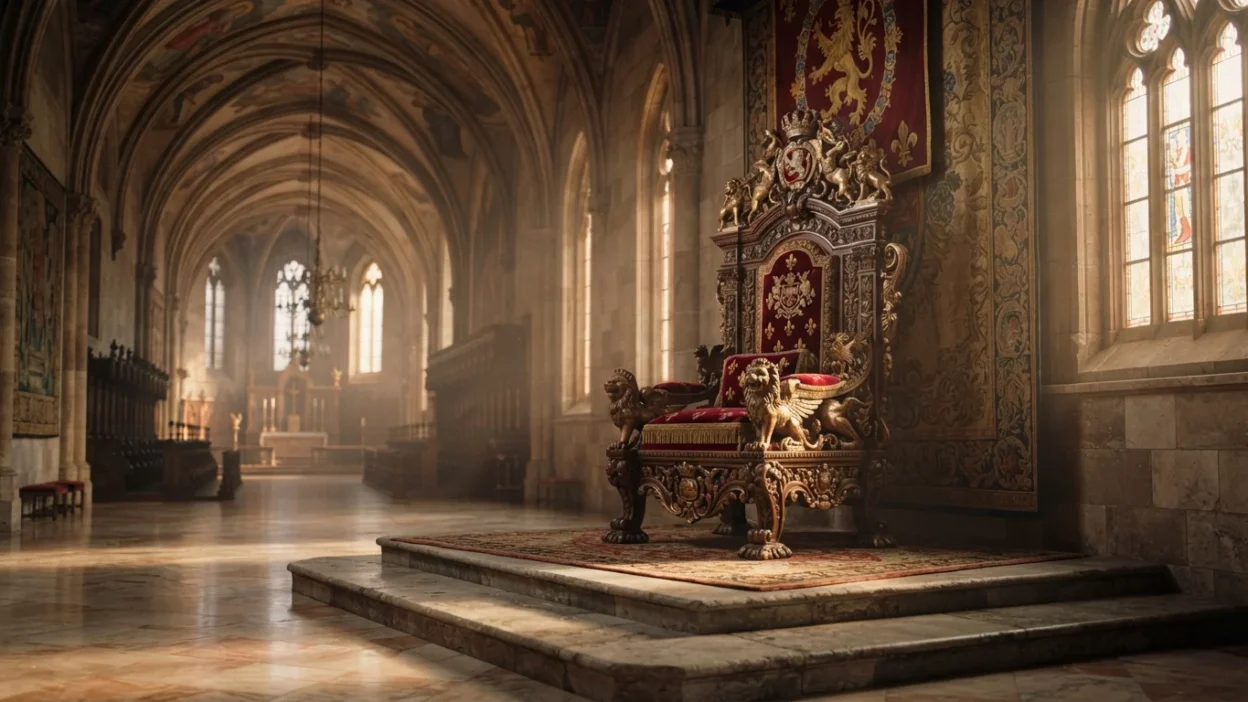
Throne symbolism is closely connected with power, authority, leadership, judgment, status, and divine presence. Throughout history, thrones have been used to distinguish rulers and important figures from others, making the throne one of the clearest symbols of authority.
But a throne can mean much more than political power. In religious art, literature, dreams, and modern symbolism, it can represent responsibility, influence, security, identity, or the position someone holds in life.
The meaning of a throne depends heavily on its setting. A royal throne may represent earthly authority, while an empty throne may suggest lost power, mystery, or an absent ruler.
Throne Symbolism Meaning (Clear Definition)
Throne symbolism refers to the meanings associated with a throne as a seat of authority or elevated status. Traditionally, a throne represents power, leadership, sovereignty, judgment, honor, control, and responsibility.
Because a throne is elevated and reserved for someone important, it can symbolize a position that places one person above others in a particular social, political, or religious structure.
| Throne Symbolism | Common Meaning |
|---|---|
| Royal throne | Power and sovereignty |
| Empty throne | Absence, mystery, or lost authority |
| Golden throne | Wealth, glory, and prestige |
| Divine throne | Spiritual authority and sacred presence |
| Broken throne | Fallen power or transformation |
| Elaborate throne | Status and influence |
| Simple throne | Authority combined with humility |
| Person sitting on throne | Leadership or control |
The surrounding context determines whether the symbolism is positive, negative, spiritual, or personal.
What Does a Throne Represent?
A throne most commonly represents authority and leadership, but several related meanings can be found across cultures.
Authority and Power
The most obvious meaning of a throne is authority.
Historically, rulers sat on thrones to demonstrate their position and distinguish themselves from ordinary members of society.
As a symbol, the throne can therefore represent control, influence, sovereignty, and the ability to make important decisions.
Leadership and Responsibility
A throne can also symbolize responsibility.
Being in a position of authority means that decisions can affect other people. For this reason, the throne may represent not only privilege but also the duties that accompany leadership.
Status and Honor
Thrones have traditionally been designed to appear impressive. Precious materials, decorative details, and elevated positions can communicate wealth and importance.
Consequently, throne symbolism can represent prestige, recognition, dignity, and social status.
Judgment
A ruler seated on a throne is often associated with making decisions or passing judgment.
This has given the throne another important symbolic meaning: justice, evaluation, accountability, and decision-making.
Spiritual Meaning of Throne Symbolism
Spiritually, the throne can represent divine authority, sacred presence, sovereignty, judgment, and the highest source of power.
In many religious traditions, the image of a throne is used to communicate that a divine being occupies a position beyond ordinary human authority.
The throne can therefore symbolize something greater than worldly status.
Divine Authority
A throne may represent the idea that ultimate authority belongs to God or a higher spiritual power.
This interpretation shifts the meaning of the throne from personal control toward recognition of a greater authority.
Spiritual Presence
An occupied throne may symbolize the presence of a divine or sacred figure.
An empty throne, by contrast, can create a sense of mystery and invite questions about absence, waiting, or unseen authority.
Judgment and Justice
Because rulers traditionally used thrones when making important decisions, the throne can also symbolize spiritual judgment and justice.
It may represent the belief that actions have consequences and that moral choices matter.
Biblical and Religious Meaning of Throne Symbolism
Throne imagery is significant throughout the Bible, although its meaning varies according to the passage.
In the Old Testament, thrones can represent kingship, authority, and royal succession. The throne of David, for example, is connected with the Davidic royal line and God’s promises concerning it.
The Bible also uses throne imagery to describe God’s heavenly authority. Isaiah 6 presents a vision in which the Lord is described as sitting on a throne, emphasizing divine majesty and holiness.
The Book of Revelation contains extensive throne imagery as well. God’s throne appears as a central symbol of heavenly authority, worship, judgment, and sovereignty.
Because of these passages, a throne in Christian symbolism can represent God’s authority, holiness, kingship, justice, and eternal sovereignty.
However, the exact meaning should always be interpreted according to the particular biblical passage rather than assuming that every throne has the same meaning.
Throne Symbolism in History and Culture
Thrones have existed in many forms across different civilizations.
Ancient rulers often used elevated or decorated seats to distinguish their authority. Thrones could be made from wood, stone, metal, ivory, or other valuable materials, depending on the culture and period.
Royal thrones became especially important in European monarchies, Asian kingdoms, African kingdoms, and other political traditions.
The design of a throne could communicate cultural values. Elaborate decorations might emphasize wealth and prestige, while religious imagery could connect the ruler with sacred authority.
In many traditions, the throne also played a ceremonial role during coronations, formal audiences, and other important events.
Throne Symbolism in Literature and Art
The throne is one of the most recognizable symbols in storytelling.
In literature, a throne can represent the desire for power, the burden of leadership, political conflict, succession, or the rise and fall of a ruler.
An empty throne can be particularly powerful. It may suggest that a kingdom has lost its leader or that someone is preparing to claim authority.
A broken throne can symbolize the collapse of an established order.
Artists also use thrones to communicate status. A person seated high above others may immediately appear powerful, while someone standing beside an empty throne may suggest uncertainty or transition.
In fantasy literature and visual art, the throne often becomes a symbol of an entire kingdom rather than simply a piece of furniture.
Dream Meaning of a Throne
Dreams involving thrones can have several possible interpretations, depending on the dreamer’s emotions and circumstances.
A throne may symbolize ambition, leadership, recognition, responsibility, influence, or a desire for greater control over one’s life.
Possible interpretations include:
- Sitting on a throne: feeling responsible, recognized, or powerful.
- Seeing an empty throne: uncertainty, absence, waiting, or a change in authority.
- Receiving a throne: entering a new position of responsibility.
- Losing a throne: experiencing a change in status or expectations.
- A broken throne: transformation, instability, or the end of an old situation.
- Seeing a golden throne: thoughts about success, prestige, wealth, or recognition.
Dream symbolism is personal and should not be treated as a prediction of future events. The feelings and circumstances surrounding the dream are important when considering its meaning.
Empty Throne Symbolism
An empty throne has a unique symbolic power.
Unlike an occupied throne, it shows authority without showing the person who possesses it. This can create meanings connected with absence, mystery, transition, uncertainty, waiting, or lost leadership.
In art and storytelling, an empty throne may suggest that a ruler has died, disappeared, stepped down, or has yet to be replaced.
It can also represent potential. Someone may eventually occupy the throne, turning the empty seat into a symbol of an approaching change.
Broken Throne Symbolism
A broken throne often represents the collapse or transformation of authority.
It may symbolize the end of a kingdom, the loss of status, political change, or the failure of an established system.
On a personal level, a broken throne can represent letting go of an old identity or realizing that power and status are not permanent.
This makes the broken throne a strong symbol of change, humility, impermanence, and renewal.
Throne and Crown Symbolism
Thrones and crowns are closely related symbols, but they communicate slightly different ideas.
A crown is usually associated with the person who possesses authority, while a throne represents the position or institution through which authority is exercised.
Together, they can symbolize complete royal power.
For example, a crown may represent achievement and status, while a throne represents responsibility and leadership.
This combination can therefore suggest that recognition comes with obligations.
Modern Meaning of Throne Symbolism
In modern culture, thrones are often used metaphorically rather than literally.
Someone may describe a person as being “on the throne” to suggest that they hold an important position or have significant influence.
Throne imagery also appears in fashion, entertainment, gaming, fantasy artwork, logos, and decorative design.
Modern interpretations can include:
- Personal power
- Confidence
- Leadership
- Independence
- Influence
- Achievement
- Social status
- Responsibility
The symbol can be positive when it represents responsible leadership, but it can also suggest arrogance or excessive desire for control.
Positive and Negative Throne Symbolism
Throne symbolism has both positive and challenging sides.
Positive meanings include:
- Leadership
- Authority
- Wisdom
- Honor
- Justice
- Responsibility
- Stability
- Protection
- Achievement
Challenging meanings include:
- Pride
- Control
- Arrogance
- Abuse of power
- Isolation
- Excessive ambition
- Fear of losing status
This contrast is one reason the throne remains such a powerful symbol.
A throne can represent responsible leadership, but it can also remind us that authority can be misused.
Throne Symbolism and Personal Growth
On a personal level, a throne can represent the question of who or what controls your life.
Rather than interpreting the symbol only as external power, it can encourage reflection on personal responsibility and values.
A healthy interpretation of the throne might involve learning to lead yourself before attempting to lead others.
It can symbolize becoming more confident, accepting responsibility, making thoughtful decisions, and understanding that influence should be used carefully.
In this sense, the throne is not simply about being above others. It can represent becoming grounded enough to handle responsibility wisely.
Why Is Throne Symbolism So Powerful?
Throne symbolism is powerful because it combines several ideas into one image: authority, identity, responsibility, status, judgment, and power.
An occupied throne communicates leadership immediately.
An empty throne creates mystery.
A broken throne communicates change.
A golden throne suggests prestige.
A sacred throne can represent divine authority.
The same basic object can therefore communicate very different ideas depending on its setting.
Frequently Asked Questions About Throne Symbolism
What is the main meaning of a throne?
The main meanings of a throne include authority, leadership, sovereignty, power, status, judgment, honor, and responsibility.
What does a throne symbolize spiritually?
Spiritually, a throne can symbolize divine authority, sacred presence, sovereignty, holiness, justice, and spiritual judgment.
What does a throne symbolize in the Bible?
Biblical throne symbolism can represent royal authority, kingship, God’s sovereignty, judgment, holiness, and the Davidic royal line, depending on the passage.
What does an empty throne symbolize?
An empty throne can symbolize absence, uncertainty, transition, lost authority, waiting, or the possibility of a new leader.
What does a broken throne symbolize?
A broken throne can represent the collapse of authority, the end of an established order, transformation, or the temporary nature of power.
What does a throne mean in a dream?
A throne in a dream may symbolize leadership, recognition, ambition, responsibility, influence, or concerns about status. Personal circumstances are important when interpreting it.
What is the difference between crown and throne symbolism?
A crown generally symbolizes the person or status associated with authority, while a throne more often represents the position, institution, or seat of authority itself.
Final Thoughts
Throne symbolism represents much more than royalty. It can symbolize power, leadership, responsibility, judgment, honor, status, spiritual authority, and transformation.
Throughout history, the throne has represented both the privilege and burden of leadership. Religious traditions have also used throne imagery to communicate divine sovereignty and judgment.
Whether it appears in a painting, dream, story, religious setting, or modern design, the throne invites us to think about authority and how it is used.
Its deeper lesson may be that true leadership is not simply about having a position. It is about having the wisdom and responsibility to carry that position well.

Emily Carter is a Christian content writer dedicated to encouraging believers through faith-filled articles and heartfelt prayers. She has a deep love for Scripture and enjoys making biblical teachings easy to understand for readers of all ages. Her work covers Christian living, family faith, devotionals, and inspirational prayers. Emily believes that God’s Word brings hope, healing, and guidance to every season of life. She writes with warmth, authenticity, and a strong commitment to biblical truth. Her articles have inspired thousands of readers to build a consistent prayer life. Outside of writing, Emily enjoys volunteering in church ministries, reading, and spending time in nature. Her goal is to help people experience God’s love and grace every day.