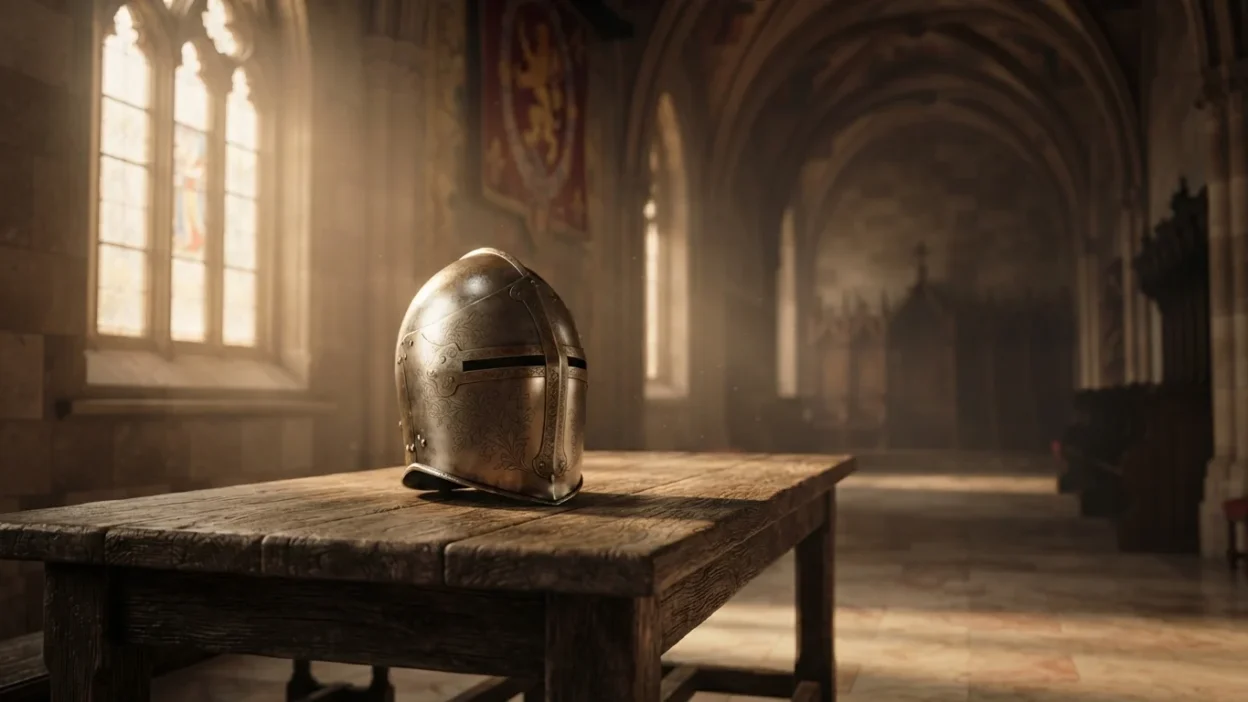
Helmet symbolism is strongly associated with protection, courage, safety, mental strength, preparedness, and resilience. Throughout history, helmets have protected the head during warfare, work, sports, and other dangerous activities. Because the head is associated with thought and identity, the helmet has also developed deeper symbolic meanings.
In spiritual traditions, literature, mythology, dreams, and modern culture, a helmet can represent protection from harm, strength of mind, confidence, and readiness to face challenges.
Unlike symbols that represent physical strength alone, the helmet often carries a connection with the mind. It can suggest protecting one’s thoughts, beliefs, identity, and sense of purpose.
Helmet Symbolism Meaning (Clear Definition)
Helmet symbolism refers to the meanings associated with a protective covering worn over the head. Its common symbolic meanings include protection, courage, mental strength, safety, preparedness, resilience, identity, and defense.
Because a helmet protects one of the body’s most important and vulnerable areas, it naturally became a symbol of safeguarding what is valuable.
| Helmet Symbolism | Common Meaning |
|---|---|
| Helmet | Protection and safety |
| Warrior helmet | Courage, strength, and readiness |
| Golden helmet | Honor, achievement, and status |
| Broken helmet | Vulnerability or transformation |
| White helmet | Peace, protection, and service |
| Helmet in religious imagery | Spiritual protection |
| Helmet in dreams | Mental defense or preparedness |
| Removing a helmet | Openness or vulnerability |
The meaning can change depending on the cultural, religious, historical, or personal context.
What Does a Helmet Represent?
A helmet most commonly represents protection and preparedness, but it can also symbolize the mind, identity, courage, and resilience.
Protection and Safety
The primary purpose of a helmet is protection.
Symbolically, this can represent the desire to protect yourself, your thoughts, your values, or the people you care about.
The helmet can therefore communicate the idea of creating a safe boundary between something valuable and potential harm.
Mental Strength
Because helmets cover the head, they can represent the mind.
A symbolic helmet may suggest clear thinking, mental discipline, determination, and the ability to remain focused during difficult situations.
Courage and Readiness
A warrior putting on a helmet before entering a dangerous situation represents preparation.
In symbolic terms, the helmet can therefore communicate courage and readiness to face challenges.
Identity
Historically, helmets could also communicate identity. Certain helmets were associated with particular armies, cultures, occupations, or social groups.
As a symbol, a helmet can therefore represent belonging, role, identity, and purpose.
Spiritual Meaning of Helmet Symbolism
Spiritually, helmet symbolism often represents faith, protection of the mind, hope, salvation, wisdom, and spiritual readiness.
The head is closely associated with thoughts and decisions, so a helmet can metaphorically represent protecting the mind from fear, doubt, confusion, or discouragement.
Protection of the Mind
A spiritual helmet may symbolize maintaining healthy and faithful thoughts during difficult circumstances.
It can serve as a reminder to guard what influences the mind and to remain grounded in meaningful values.
Hope and Salvation
Christian symbolism gives the helmet a particularly strong connection with salvation.
The image suggests that spiritual hope can provide protection and confidence when a person faces uncertainty.
Spiritual Readiness
Putting on a helmet can also symbolize preparing oneself mentally and spiritually.
It may represent developing wisdom, patience, faith, courage, and discipline before facing challenges.
Biblical and Religious Meaning of Helmet Symbolism
Helmet symbolism appears notably in the Bible as part of the armor of God.
Ephesians 6:17 describes the “helmet of salvation.” In this passage, the helmet is part of a larger metaphorical set of armor representing spiritual readiness and steadfastness.
The helmet’s association with salvation connects it with hope, spiritual identity, and confidence in God’s saving work.
The Bible also uses helmet imagery elsewhere. For example, 1 Thessalonians 5:8 connects the helmet with the hope of salvation.
These passages give the helmet a distinctly spiritual meaning in Christian interpretation.
Rather than describing literal protective equipment, the imagery communicates the importance of guarding one’s mind and remaining grounded in faith and hope.
Helmet of Salvation Symbolism
The helmet of salvation is one of the most recognizable Christian symbolic images involving a helmet.
Its meaning can be understood through several connected ideas:
- Salvation: confidence in God’s saving work.
- Hope: looking toward God’s promises.
- Mental protection: remaining grounded during spiritual difficulties.
- Faith: maintaining trust when circumstances are uncertain.
- Readiness: remaining prepared to live according to one’s beliefs.
Together, these ideas make the helmet a symbol of spiritual confidence and protection.
Helmet Symbolism in History and Culture
Helmets have appeared across many historical periods and cultures.
Ancient warriors developed helmets from materials such as leather and metal to protect the head. Greek, Roman, Viking, medieval European, Japanese, and many other military traditions developed distinctive designs.
Helmets could also communicate identity and rank.
Decorations, crests, shapes, and materials sometimes helped distinguish different groups or individuals.
Outside warfare, helmets became associated with occupations and activities where head protection was important, including construction, cycling, motorsports, and various forms of organized sport.
As a result, the helmet has developed a modern association with safety, responsibility, professionalism, and preparedness.
Helmet Symbolism in Literature and Art
In literature and art, helmets frequently appear as symbols of warriors, heroes, guardians, and protectors.
A helmet can immediately communicate that a character is prepared to face danger.
A decorated helmet may suggest rank or honor, while a damaged helmet can represent hardship, sacrifice, or survival.
An abandoned helmet can create a different emotional meaning. It may symbolize absence, loss, the end of conflict, or the memory of someone who once wore it.
Artists can therefore use the helmet to communicate both strength and the consequences of difficult experiences.
Dream Meaning of a Helmet
Dreams involving helmets can have different personal interpretations.
Because a helmet protects the head, it may symbolize thoughts, decisions, emotional defenses, preparation, or concerns about safety.
Possible interpretations include:
- Wearing a helmet: feeling prepared or protected.
- Putting on a helmet: preparing mentally for a challenge.
- Removing a helmet: becoming more open or allowing vulnerability.
- A broken helmet: feeling exposed, challenged, or changed.
- A shiny helmet: confidence, recognition, or readiness.
- A heavy helmet: mental pressure or feeling burdened.
- Finding a helmet: discovering a new sense of protection or preparedness.
Dream interpretation is subjective and should not be treated as a prediction. Personal emotions and circumstances provide important context.
Broken Helmet Symbolism
A broken helmet can represent vulnerability, hardship, change, loss, or the limits of protection.
Since the helmet is meant to protect the head, damage to it can symbolize a situation in which a person’s defenses have been challenged.
However, a broken helmet does not necessarily represent defeat.
In literature and art, it may instead represent endurance. The damaged object can show that someone has faced difficulty and continued forward.
It can therefore symbolize both vulnerability and resilience.
Golden Helmet Symbolism
A golden helmet can carry associations with honor, achievement, leadership, glory, wealth, and prestige.
Gold traditionally communicates value and importance, while the helmet represents protection and strength.
Together, these meanings can create an image of someone who has achieved distinction while carrying responsibility.
In mythology and fantasy art, golden helmets may also represent heroic status or exceptional power.
Helmet and Armor Symbolism
The helmet and armor are closely connected symbols.
Armor generally represents protection of the body, while the helmet specifically protects the head.
Together, they can symbolize complete preparedness and defense.
The combination may represent:
- Physical protection
- Mental strength
- Courage
- Discipline
- Preparedness
- Resilience
- Spiritual readiness
In Christian symbolism, this relationship is especially visible in the armor of God described in Ephesians 6.
Modern Meaning of Helmet Symbolism
Today, helmets are strongly associated with safety, responsibility, preparedness, and protection.
Unlike historical warrior helmets, modern helmets are commonly used by cyclists, athletes, workers, emergency responders, and people participating in various activities where head protection is important.
This gives the helmet a practical modern symbolism: taking precautions because something valuable should be protected.
The symbol can therefore communicate maturity and responsibility as much as courage.
Helmet Symbolism and Mental Protection
One of the most interesting symbolic meanings of a helmet is protection of the mind.
People often face stress, criticism, uncertainty, and difficult decisions. A symbolic helmet can represent the mental strength needed to remain focused without allowing every outside influence to control one’s thinking.
At the same time, mental protection should not mean shutting out every new idea.
The helmet can instead represent discernment: knowing what deserves attention, what should be rejected, and what should be carefully considered.
Positive and Negative Helmet Symbolism
Helmet symbolism has many positive meanings, but it can also have challenging interpretations.
Positive meanings include:
- Protection
- Courage
- Safety
- Mental strength
- Faith
- Hope
- Preparedness
- Resilience
- Discipline
Challenging meanings can include:
- Defensiveness
- Fear
- Emotional distance
- Rigidity
- Isolation
- Excessive caution
- Resistance to new ideas
The same helmet can therefore symbolize healthy protection in one context and excessive defensiveness in another.
Helmet Symbolism and Personal Growth
A helmet can offer an important lesson about personal growth.
Protecting your mind does not mean avoiding every challenge. It can mean developing the wisdom to decide which influences deserve your attention.
The helmet may encourage you to strengthen your thoughts, protect your values, and prepare yourself for difficult situations.
But growth also requires flexibility.
The deepest meaning may therefore be about learning how to protect your mind without closing it.
Why Is Helmet Symbolism So Powerful?
Helmet symbolism remains powerful because it combines physical protection with the symbolic importance of the mind.
A shield protects the body from outside danger, while a helmet specifically protects the head.
This makes it an especially useful symbol for ideas such as mental strength, spiritual hope, courage, preparation, identity, and resilience.
Whether appearing in ancient artwork, religious imagery, historical artifacts, dreams, or modern safety symbols, the helmet communicates a simple message:
What is valuable should be protected.
Frequently Asked Questions About Helmet Symbolism
What is the main meaning of a helmet?
The main meanings of a helmet include protection, safety, courage, mental strength, preparedness, resilience, defense, and identity.
What does a helmet symbolize spiritually?
Spiritually, a helmet can symbolize faith, hope, salvation, protection of the mind, spiritual strength, and readiness.
What does a helmet symbolize in the Bible?
In the Bible, the helmet is especially associated with salvation. Ephesians 6:17 describes the “helmet of salvation” as part of the armor of God.
What does a broken helmet symbolize?
A broken helmet may symbolize vulnerability, hardship, transformation, loss, or the experience of overcoming difficult circumstances.
What does a golden helmet symbolize?
A golden helmet can symbolize honor, achievement, leadership, glory, prestige, and valued strength.
What does a helmet mean in a dream?
A helmet in a dream may represent protection, preparedness, mental defense, courage, or concerns about safety. Personal circumstances affect its interpretation.
What does a helmet and armor symbolize together?
A helmet and armor together can symbolize complete protection, courage, preparedness, resilience, and the ability to defend both the body and mind.
Final Thoughts
Helmet symbolism represents a powerful combination of protection, courage, mental strength, faith, hope, preparedness, and resilience.
Historically, helmets protected warriors from physical danger. In modern life, they represent safety and responsibility. In Christian symbolism, the helmet of salvation represents spiritual hope and protection.
Perhaps its deepest lesson concerns the mind. Just as a physical helmet protects the head, symbolic protection can help us guard our thoughts, values, and sense of purpose.
True strength does not mean shutting yourself away from the world. It means developing enough wisdom to know what to protect, what to accept, and what to let go.

Daniel Brooks is a Christian writer with a passion for sharing biblical wisdom through simple and encouraging content. He has spent years studying Scripture and creating devotionals that strengthen faith in everyday life. His writing focuses on prayer, hope, spiritual growth, and trusting God’s promises. Daniel believes that every believer can develop a deeper relationship with Christ through daily prayer and Bible study. His articles are written with compassion, clarity, and biblical accuracy. He enjoys helping readers find peace during life’s challenges through God’s Word. When not writing, Daniel enjoys reading Christian books, serving in his local church, and spending time with his family. His mission is to inspire people around the world to grow closer to Jesus every day.