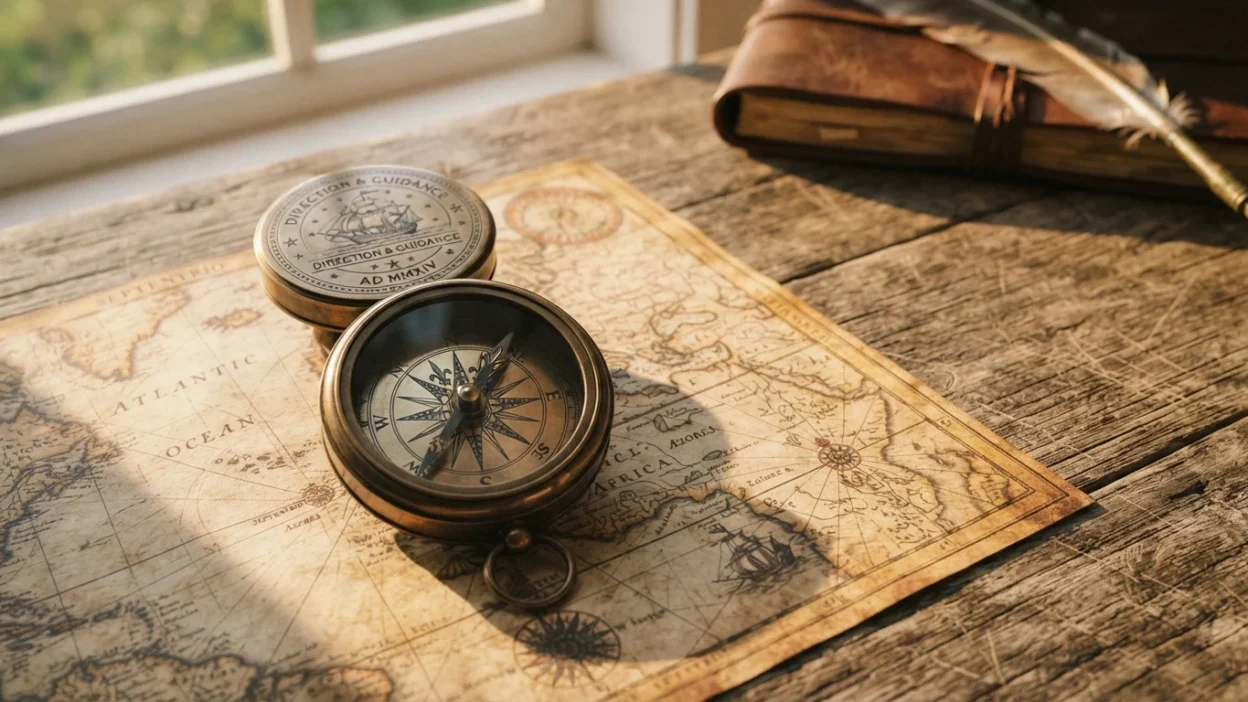
Map symbolism explores the deeper meanings associated with maps, including direction, discovery, purpose, freedom, and the journey through life. A map is more than a drawing of roads, borders, or landscapes. It can represent the search for answers, the desire to understand ourselves, and the courage to explore unfamiliar possibilities.
Throughout history, maps have helped people navigate the world, discover new places, and understand their surroundings. Symbolically, they can also represent the paths we choose, the goals we pursue, and the decisions that shape our future.
Whether a map appears in a dream, a story, a painting, or everyday life, its meaning often relates to finding direction and understanding where we want to go.
Map Symbolism Meaning (Clear Definition)
Map symbolism refers to the ideas and meanings connected with maps beyond their practical purpose. Maps commonly symbolize guidance, exploration, planning, knowledge, direction, and the search for one’s place in the world.
A map shows possible routes, but it does not always determine which route someone should take. In this way, it can represent the choices available to us and the responsibility of deciding how to move forward.
| Map Symbol | Common Meaning |
|---|---|
| World map | Possibility, connection, and global awareness |
| Road map | Planning, progress, and life direction |
| Treasure map | Discovery, ambition, and hidden opportunities |
| Old map | History, memory, and inherited wisdom |
| Blank map | Uncertainty, potential, and new beginnings |
| Torn map | Confusion, obstacles, or changing plans |
| Map with a compass | Direction, guidance, and purpose |
| Map of unfamiliar places | Curiosity, change, and exploration |
The meaning of a map depends on its condition, setting, and the feelings associated with it.
What Does a Map Represent?
A map can represent several important ideas in personal, spiritual, and cultural life.
Direction and Guidance
One of the strongest meanings of a map is direction. Maps help people understand where they are and identify possible ways to reach a destination.
Symbolically, a map may represent advice, knowledge, or inner wisdom that helps someone make a decision. It can remind us that having direction does not mean knowing every detail of the future.
Exploration and Discovery
Maps are closely associated with exploration because they reveal places beyond familiar surroundings. They can symbolize curiosity, adventure, and the willingness to learn.
A map may represent a new opportunity, an unfamiliar experience, or a desire to see life from a wider perspective.
Planning and Preparation
Maps help travelers prepare for journeys by showing distances, routes, and important locations. As a symbol, they represent careful thinking and the importance of preparing before taking action.
They can also remind us that planning provides structure while leaving room for unexpected changes.
Knowledge and Understanding
A map organizes complicated information into a form that people can understand. It can symbolize learning, awareness, and the ability to see how different parts of a situation connect.
In personal life, this meaning may relate to understanding a challenge or gaining a clearer view of a long-term goal.
Choice and Freedom
A map often displays several possible routes to the same destination. This makes it a powerful symbol of choice and personal freedom.
It reminds us that reaching a goal may involve different approaches. Sometimes, changing direction is not failure but a sensible response to new information.
Spiritual Meaning of Map Symbolism
The spiritual meaning of a map often centers on purpose, guidance, personal growth, and the search for meaning. It can represent the desire to understand one’s place in the world and move toward a life guided by meaningful values.
Finding Your Life Purpose
A map can symbolize the search for purpose. Just as travelers need to identify a destination, people often reflect on their values, hopes, and responsibilities to understand what matters most.
A map does not necessarily reveal one fixed purpose. Instead, it can represent the process of discovering what gives life meaning.
Trusting the Journey
A map may show a route, but real journeys can include unexpected turns. Spiritually, this can represent patience and the willingness to continue learning when circumstances change.
The symbol encourages thoughtful progress rather than the expectation that every stage of life must be perfectly predictable.
Inner Wisdom and Self-Discovery
Maps can also represent an inward journey. Understanding personal strengths, priorities, and beliefs can help people make decisions that feel more consistent with their values.
In this interpretation, the map becomes a symbol of self-awareness rather than simply physical travel.
Seeking Guidance
A map may symbolize the search for wisdom during uncertain times. Depending on a person’s beliefs, this guidance may come through prayer, reflection, trusted advice, study, or experience.
The symbol can serve as a reminder to pause, consider available information, and choose a thoughtful path forward.
Biblical and Religious Meaning of Map Symbolism
The Bible does not establish a single, universal symbolic meaning for maps. However, maps can be interpreted through broader biblical themes such as guidance, journeys, wisdom, and trust in God.
God’s Guidance
Proverbs 3:5–6 encourages believers to trust in the Lord and acknowledge Him in their ways. These verses are often associated with seeking divine direction.
A map can serve as a modern visual analogy for this idea: people can make plans while remaining humble about what they cannot fully predict.
Journeys of Faith
Biblical stories include many significant journeys. Abraham traveled in response to God’s call, the Israelites journeyed toward the Promised Land, and Paul traveled to share the Christian message.
These journeys can be studied as examples of faith, perseverance, obedience, and change. A map may symbolically represent the route of a spiritual journey, although the map itself is not assigned a special biblical meaning.
The Path of Wisdom
Psalm 119:105 describes God’s word as a lamp for the feet and a light for the path. This imagery connects with the broader idea of receiving guidance while moving forward.
A map can remind Christians to seek wisdom through Scripture, prayer, and careful reflection when making decisions.
Religious interpretations vary, so map symbolism should be understood as a personal or artistic association rather than a fixed biblical doctrine.
Map Symbolism in History and Culture
Maps have played important roles in navigation, trade, exploration, government, education, and cultural exchange. Their symbolic meaning has developed alongside these practical uses.
Ancient Maps
Early maps helped people record familiar landscapes, rivers, settlements, and important routes. They reflected the knowledge and worldview of the communities that created them.
Symbolically, ancient maps can represent humanity’s long-standing desire to understand the world and find a place within it.
Maps and Exploration
During periods of maritime exploration, maps became closely associated with discovery, ambition, travel, and expanding knowledge. They could represent the possibility of reaching distant places and establishing new connections.
However, maps also played a role in conquest and colonization. Their history therefore includes questions about power, ownership, borders, and whose understanding of a place becomes officially recognized.
Maps and Identity
Political maps show borders, territories, and national divisions. Cultural maps may represent languages, traditions, communities, and shared histories.
These maps can symbolize belonging and identity, but they also remind us that boundaries may change and that the people living within them have experiences that cannot be fully captured by lines on paper.
Map Symbolism in Literature and Art
In literature and art, maps often serve as symbols of adventure, imagination, personal ambition, and the search for something unknown.
Maps in Adventure Stories
Treasure maps frequently appear in adventure stories. They lead characters toward hidden objects, mysterious locations, or unexpected discoveries.
Beyond the literal treasure, the map can symbolize ambition, curiosity, courage, and the rewards of perseverance.
Maps as Symbols of Personal Growth
A fictional character may use a map while traveling through an unfamiliar landscape. This journey can parallel an emotional or personal transformation.
The places a character visits may represent challenges, opportunities, relationships, or lessons that gradually change their understanding of themselves.
Imaginary Maps and Creativity
Fantasy literature often features invented worlds with detailed maps. These maps help readers imagine unfamiliar kingdoms, landscapes, and civilizations.
Symbolically, an imaginary map can represent creativity and the ability to envision possibilities beyond the world we already know.
Different Types of Map Symbolism
The type of map can influence its symbolic interpretation.
World Map Symbolism
A world map often represents global connection, perspective, diversity, and possibility. It may express a desire to travel, learn about other cultures, or understand how different communities are connected.
It can also symbolize the realization that the world is larger and more complex than one’s immediate surroundings.
Road Map Symbolism
A road map is commonly associated with planning, progress, and practical decisions. It can represent the steps needed to reach a goal.
In a personal context, it may suggest the importance of breaking a large ambition into manageable stages.
Treasure Map Symbolism
A treasure map represents the search for something valuable. The treasure might symbolize knowledge, opportunity, happiness, achievement, or self-understanding rather than material wealth alone.
It can also suggest that meaningful discoveries often require patience and effort.
Old Map Symbolism
An old map may symbolize memory, heritage, history, and lessons learned. Its aged appearance can represent the connection between the past and the present.
It may encourage reflection on earlier experiences while reminding us that old information does not always describe current circumstances accurately.
Blank Map Symbolism
A blank map can represent possibility, uncertainty, creativity, and an unwritten future. It may suggest that a person is entering a new chapter without knowing exactly what will happen.
Rather than automatically representing confusion, a blank map can be a positive symbol of freedom and opportunity.
Torn or Damaged Map Symbolism
A torn map may represent interrupted plans, uncertainty, or difficulty finding direction. It can reflect a situation in which familiar guidance no longer feels useful.
This image may also symbolize the need to gather new information, ask for help, or reconsider an outdated approach.
Map and Compass Symbolism
Maps and compasses are natural symbolic companions. A map represents the broader landscape and the possible routes through it, while a compass represents direction and orientation.
Together, they can symbolize planning combined with a sense of purpose.
A map without a compass may suggest many choices without a clear sense of direction. A compass without a map may represent knowing one’s general direction while still needing to understand the surroundings.
Their combined symbolism highlights the relationship between practical knowledge and personal values.
Map Symbolism in Dreams: Possible Meanings
Dreams about maps can have different meanings depending on the dreamer’s circumstances and emotions. There is no scientifically established universal interpretation that applies to every person.
Reading a Map in a Dream
Reading a map may reflect an effort to understand a situation or make a decision. It could relate to planning, learning, or considering possible next steps.
Getting Lost While Following a Map
This dream may connect with feelings of uncertainty or frustration. It could reflect a real-life plan that seems difficult to follow or information that no longer feels sufficient.
Finding a Treasure Map
Finding a treasure map may represent curiosity, ambition, or the hope of discovering something meaningful. Consider what the treasure represents to you personally.
Drawing Your Own Map
Drawing a map may symbolize creativity, independence, or a desire to organize your future. It can reflect a wish to take a more active role in making decisions.
Losing a Map
Losing a map may relate to uncertainty or a change in plans. It does not predict failure; instead, it may be an opportunity to reflect on what information or support would help you feel more prepared.
When interpreting a map dream, consider the setting, your emotions, and any current decisions or changes in your life.
Map Color Symbolism
The colors used on a map can add another layer of meaning, especially in art, design, and personal interpretation.
- Blue maps: May suggest calmness, knowledge, water, or a broad perspective.
- Green maps: Often connect with nature, growth, renewal, and fertile landscapes.
- Red maps: May emphasize urgency, boundaries, important locations, or warning signs.
- Gold maps: Can symbolize treasure, ambition, value, or discovery.
- Black-and-white maps: May suggest clarity, structure, simplicity, or historical documentation.
- Antique brown maps: Often evoke heritage, memory, exploration, and the passage of time.
These are common associations rather than universal rules. The meaning of a color can change according to its cultural setting and the purpose of the map.
Map Symbolism in Relationships
In relationships, a map can symbolize shared direction, mutual understanding, and the process of building a future together.
A map used by two people may represent common goals, cooperation, and the conversations needed to decide what comes next.
A map showing different routes can symbolize differing priorities. It does not necessarily suggest that a relationship is failing; it may simply highlight the need for honest communication and respect for individual choices.
A map can also represent the importance of understanding another person’s background. People may share a destination while bringing different experiences, values, and expectations to the journey.
Map Symbolism and Personal Growth
A map is a useful symbol for personal development because growth often involves recognizing where we are, deciding where we hope to go, and learning how to move forward.
Understanding Where You Are
Before choosing a direction, it helps to understand your current circumstances. This may involve recognizing your strengths, acknowledging challenges, and identifying the resources available to you.
Setting Meaningful Goals
A map encourages you to think about destinations. In everyday life, these destinations might include learning a skill, improving a habit, completing a project, or developing stronger relationships.
Accepting Changes in Direction
Not every route works as expected. Personal growth includes adjusting plans when circumstances change or new information becomes available.
Changing direction can be a thoughtful decision rather than a sign that you have lost your way.
Learning From the Journey
A map helps identify a destination, but experience teaches you what the journey is like. Challenges, discoveries, and unexpected encounters can all contribute to greater understanding.
Modern Meaning of Map Symbolism
In modern life, maps appear in digital navigation apps, travel planning, educational tools, games, and data visualizations. Their symbolic meaning continues to evolve.
Digital maps can represent convenience, access to information, and the ability to explore unfamiliar places. They may also raise questions about privacy, dependence on technology, and the difference between following directions and understanding one’s surroundings.
In personal development, the phrase “mapping out the future” refers to setting goals and identifying practical steps. A map can therefore represent an organized plan without suggesting that every future event can be controlled.
Maps also encourage broader thinking. By showing relationships between places, they can help people recognize connections that might otherwise remain hidden.
Positive and Negative Map Symbolism
Map symbolism has both encouraging and challenging interpretations.
Positive meanings include:
- Guidance and direction
- Exploration and discovery
- Knowledge and understanding
- Planning and preparation
- Freedom and possibility
- Personal growth and purpose
- Connection between people and places
Challenging meanings include:
- Uncertainty about the future
- Confusion when information is incomplete
- Overplanning or fear of the unknown
- Restriction through borders or boundaries
- Outdated beliefs about the best path
- Dependence on external guidance
The challenging meanings do not make a map a negative symbol. They highlight the limits of plans and the importance of remaining flexible.
Why Is Map Symbolism So Powerful?
Map symbolism is powerful because almost everyone understands the need for direction. People make choices about education, work, relationships, personal goals, and the kind of life they want to build.
A map offers a familiar image for these experiences. It turns an abstract idea, such as finding purpose, into something people can picture and understand.
It also balances two important ideas: preparation and possibility. Maps provide useful information, but they cannot reveal every obstacle or opportunity in advance.
Ultimately, a map reminds us that direction matters, yet the journey remains open to discovery.
FAQs About Map Symbolism
What does a map symbolize spiritually?
A map may symbolize spiritual guidance, purpose, self-discovery, and the search for a meaningful direction. Its interpretation depends on personal beliefs and circumstances.
What does a map symbolize in life?
A map commonly represents planning, decision-making, personal goals, and the choices that shape a person’s journey through life.
What does a treasure map symbolize?
A treasure map often symbolizes ambition, discovery, opportunity, and the search for something valuable. The treasure may represent knowledge, happiness, achievement, or personal growth.
What does a blank map symbolize?
A blank map can represent new beginnings, freedom, uncertainty, and untapped potential. It may suggest that a person has room to shape their own path.
What does an old map symbolize?
An old map often represents history, memory, heritage, and lessons from the past. It can also remind us that earlier information may need to be reconsidered as circumstances change.
What does a map symbolize in dreams?
A map in a dream may reflect planning, uncertainty, decision-making, or a search for direction. Dream meanings are personal and should not be treated as predictions.
What is the difference between map and compass symbolism?
A map often symbolizes the available routes and the broader landscape, while a compass symbolizes direction and orientation. Together, they can represent planning guided by purpose.
Does the Bible give maps a specific symbolic meaning?
No single symbolic meaning for maps is established in the Bible. However, maps can be used as a modern analogy for biblical themes of guidance, journeys, wisdom, and faith.
Final Thoughts
Map symbolism represents the human desire to find direction, explore possibilities, and understand the journey ahead. From ancient maps to modern navigation apps, maps have helped people make sense of unfamiliar places and imagine destinations beyond their immediate surroundings.
Spiritually, a map may encourage reflection on purpose and guidance. In literature and art, it can represent adventure, ambition, and discovery. In everyday life, it offers a simple reminder that meaningful progress often begins with understanding where we are and considering where we want to go.
A map cannot guarantee a perfect journey, but it can help us recognize our options. Sometimes, the most important discovery is not the destination itself but what we learn along the way.

Daniel Brooks is a Christian writer with a passion for sharing biblical wisdom through simple and encouraging content. He has spent years studying Scripture and creating devotionals that strengthen faith in everyday life. His writing focuses on prayer, hope, spiritual growth, and trusting God’s promises. Daniel believes that every believer can develop a deeper relationship with Christ through daily prayer and Bible study. His articles are written with compassion, clarity, and biblical accuracy. He enjoys helping readers find peace during life’s challenges through God’s Word. When not writing, Daniel enjoys reading Christian books, serving in his local church, and spending time with his family. His mission is to inspire people around the world to grow closer to Jesus every day.