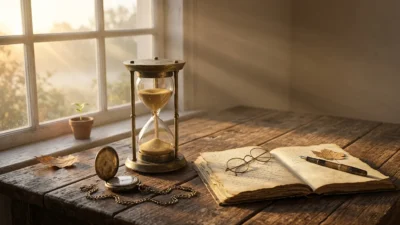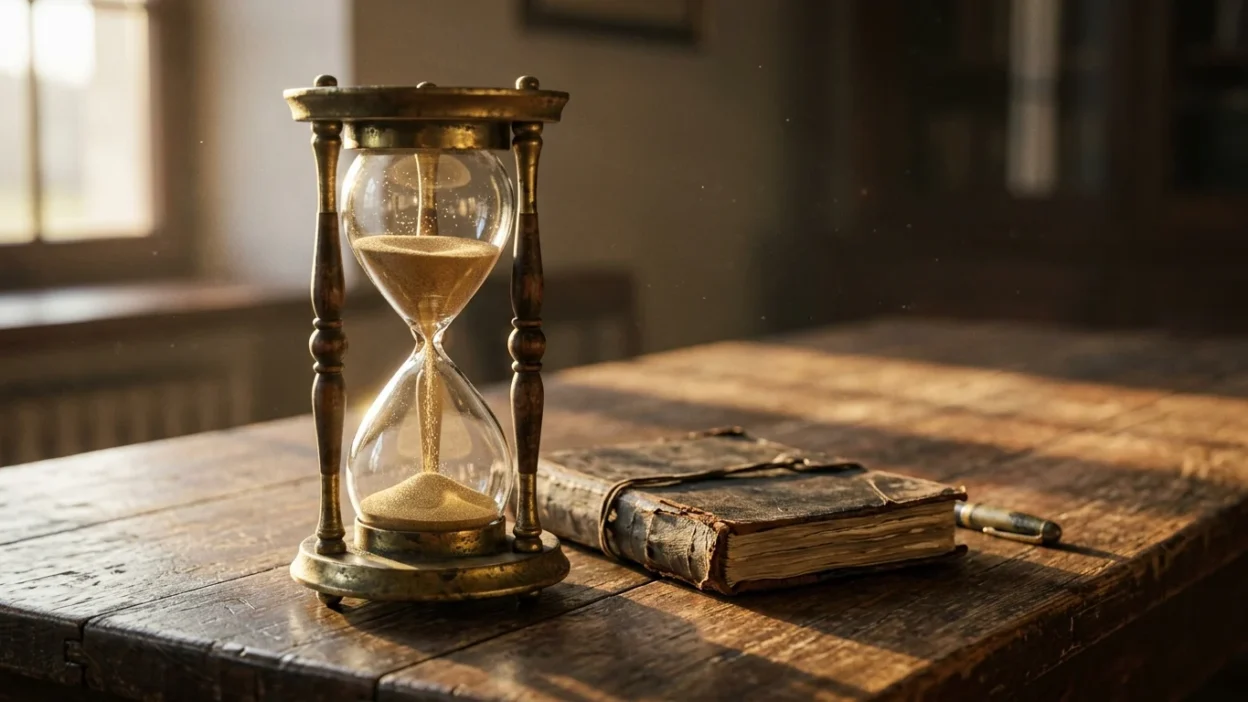
Hourglass symbolism explores the deeper meanings associated with time, mortality, patience, change, and the temporary nature of life. With sand slowly falling from one glass chamber into another, an hourglass offers a powerful visual reminder that time continues to move, even when we are standing still.
Throughout history, the hourglass has been used to measure time and represent the limits of human life. In art, literature, and spiritual reflection, it can symbolize the importance of living meaningfully, accepting change, and recognizing that every stage of life eventually passes.
Whether an hourglass appears in a painting, a dream, a piece of jewelry, or a personal reflection, its meaning often connects with how we understand the past, experience the present, and prepare for the future.
Hourglass Symbolism Meaning (Clear Definition)
Hourglass symbolism refers to the meanings associated with the hourglass beyond its practical function as a timekeeping device. It commonly represents the passage of time, life’s temporary nature, patience, transformation, and the importance of using time wisely.
The falling sand represents time moving forward. The narrow opening between the two chambers can symbolize transition, while the lower chamber suggests accumulated experiences or the completion of a stage.
| Hourglass Symbol | Common Meaning |
|---|---|
| Flowing sand | The passage of time |
| Nearly empty upper chamber | Limited time or an approaching deadline |
| Full lower chamber | Experience, memory, or completed stages |
| Broken hourglass | Disruption, change, or the end of a familiar pattern |
| Turned-over hourglass | Renewal, repetition, or a fresh beginning |
| Golden hourglass | Value, wisdom, and meaningful opportunities |
| Black hourglass | Mortality, mystery, or reflection |
| Frozen sand | Stagnation or a desire to stop time |
| Hourglass with wings | The fleeting nature of life |
| Hourglass with flowers | Growth, renewal, and the relationship between time and life |
These interpretations are common symbolic associations rather than universal rules. The context in which an hourglass appears can change its meaning.
What Does an Hourglass Represent?
An hourglass can represent several important ideas about human life, personal decisions, and the passage of time.
The Passage of Time
The most recognizable meaning of an hourglass is the movement of time. Unlike a clock face, which displays changing numbers or positions, an hourglass makes time visible through the steady movement of sand.
This can symbolize the understanding that every moment passes and that life is always changing. It encourages people to notice the present rather than assuming that every opportunity will remain available forever.
Mortality and the Temporary Nature of Life
The hourglass has long been associated with mortality because its sand eventually runs out. In symbolic art, this image reminds viewers that human life has limits.
Although this association may feel serious, it can also inspire gratitude. Recognizing that time is limited may encourage people to strengthen relationships, pursue meaningful goals, and appreciate ordinary moments.
Patience and Acceptance
An hourglass cannot make its sand fall faster simply because someone wants it to. This makes it a symbol of patience and acceptance.
Some goals require time, practice, and persistence. The hourglass can remind us that progress often happens gradually and that rushing every process may create unnecessary frustration.
Change and Transformation
As sand moves from one chamber to the other, the hourglass changes while remaining the same object. This can symbolize the transition from one stage of life to another.
Graduation, a new job, a move, or a change in personal priorities may all involve leaving one phase behind while entering another.
Balance and Continuity
Turning an hourglass over allows the process to begin again. Symbolically, this action can represent renewal, resilience, and the opportunity to continue after an ending.
It suggests that although individual moments cannot be recovered, people can begin new chapters and make different choices.
Spiritual Meaning of Hourglass Symbolism
The spiritual meaning of an hourglass often centers on awareness, patience, impermanence, personal growth, and the relationship between time and purpose.
Living With Greater Awareness
An hourglass can serve as a reminder to live consciously. It encourages reflection on whether daily activities reflect the values and priorities that matter most.
Rather than creating fear about the future, this symbolism can inspire people to appreciate the present and act with greater intention.
Accepting Life’s Seasons
Life includes periods of growth, uncertainty, achievement, rest, and change. The hourglass can represent these shifting seasons and the understanding that no single stage lasts forever.
During difficult periods, this interpretation may offer comfort by reminding people that circumstances can change. During joyful periods, it can encourage gratitude for experiences that deserve to be treasured.
Trusting the Process
The steady movement of sand can symbolize trust in gradual progress. Personal growth rarely happens all at once, and important changes may take longer than expected.
Spiritually, the hourglass can encourage patience while a person continues to make thoughtful choices. It does not guarantee that events will unfold according to a particular plan, but it can serve as a reminder to remain steady through uncertainty.
Releasing the Past
Once the sand reaches the lower chamber, the previous arrangement has changed. Turning the hourglass over creates a new cycle.
This can symbolize the decision to learn from past experiences without allowing them to control every future choice. It encourages reflection, forgiveness, and a willingness to move forward when appropriate.
Biblical and Religious Meaning of Hourglass Symbolism
The Bible does not assign the hourglass a specific, universal symbolic meaning. However, its themes of time, mortality, wisdom, and life’s changing seasons connect with several biblical passages.
Numbering Our Days
Psalm 90:12 asks God to teach people to number their days so that they may gain a heart of wisdom.
This verse encourages awareness of life’s limits and thoughtful use of the time available. An hourglass can serve as a modern visual reminder of this idea, although the verse does not directly refer to an hourglass.
A Time for Every Season
Ecclesiastes 3:1 teaches that there is a season for every activity and a time for every matter under heaven.
The hourglass can be used as a visual analogy for this teaching. Its flowing sand represents the movement from one moment to another, while its two chambers suggest transitions between different stages.
Human Life Is Temporary
James 4:14 compares human life to a mist that appears for a little while and then vanishes. This passage emphasizes the uncertainty and temporary nature of life.
In a Christian interpretation, the hourglass may encourage humility, gratitude, and attention to what truly matters rather than excessive confidence in future plans.
Patience and Hope
Christian teachings often encourage believers to remain patient, trust God, and continue acting faithfully during difficult seasons.
The hourglass may symbolize this process of waiting and perseverance. However, seeing an hourglass should not be treated as a guaranteed message from God or a prediction about when an event will occur.
Hourglass Symbolism in History and Culture
The hourglass has a long history as a practical instrument and a symbolic object. Its simple design made it useful for measuring periods of time while also providing a striking image for artists and storytellers.
The Hourglass as a Timekeeping Device
Hourglasses became useful in various settings where people needed to measure a defined period. They were used in contexts such as maritime activities, household routines, and certain work or ceremonial practices.
Their practical function helped establish their association with punctuality, limited time, and the need to complete tasks within a set period.
Hourglasses in European Art
In European art, particularly in works concerned with mortality, an hourglass could represent the temporary nature of earthly life. It sometimes appeared alongside skulls, wilting flowers, or other objects associated with life’s impermanence.
Such images encouraged viewers to reflect on the difference between temporary possessions and lasting values.
The Hourglass and the Grim Reaper
In some Western artistic traditions, the Grim Reaper is depicted holding an hourglass. The object emphasizes that life has a limited duration and that time eventually comes to an end.
This is a cultural and artistic association, not a universal belief shared by every religion or society.
Modern Cultural Interpretations
Today, hourglasses appear in jewelry, tattoos, logos, illustrations, and decorative objects. They may symbolize mindfulness, patience, urgency, nostalgia, or the desire to make time meaningful.
Their interpretation often depends on the surrounding imagery. An hourglass paired with flowers may suggest renewal, while one paired with a skull may emphasize mortality.
Hourglass Symbolism in Literature and Art
Writers and artists use hourglasses to explore time, change, memory, and the limits of human control.
The Hourglass as a Reminder of Mortality
An hourglass in a story may create a sense of urgency by showing that time is running out. A character might need to make a decision before the last grains of sand fall.
Beyond suspense, this image can symbolize the importance of acting according to one’s values instead of endlessly postponing meaningful choices.
The Hourglass as a Symbol of Transformation
Because the sand moves between two chambers, an hourglass can represent a transition from one condition to another.
In literature, this may reflect a character’s movement from innocence to experience, uncertainty to understanding, or an old identity toward a new one.
The Hourglass in Surreal and Symbolic Art
Artists may distort the shape of an hourglass, suspend its sand, or place it in an unexpected setting to challenge ordinary ideas about time.
Such images can suggest that time feels different during grief, excitement, nostalgia, or profound change. The object becomes a way to explore subjective experience rather than simply measure minutes.
Different Types of Hourglass Symbolism
The appearance and condition of an hourglass can influence its symbolic interpretation.
Broken Hourglass Symbolism
A broken hourglass may represent disruption, disappointment, or the end of a familiar routine. It can suggest that a plan has changed or that a person is reconsidering how they use their time.
It may also symbolize freedom from an old schedule or expectation. The meaning depends on whether the breakage feels upsetting, relieving, or simply unexpected.
Empty Hourglass Symbolism
An hourglass with all its sand in the lower chamber can represent completion, the end of a stage, or the feeling that a period has passed.
It may encourage reflection on what has been learned and what should come next. It does not necessarily mean that opportunities have disappeared; turning the hourglass over offers a visual reminder of renewal.
Turning an Hourglass Over
Turning an hourglass over symbolizes repetition, renewal, and the chance to begin another cycle.
In personal life, this can represent trying again after a setback, returning to a meaningful goal, or approaching a familiar challenge with a new perspective.
Hourglass With Wings Symbolism
An hourglass with wings often emphasizes the fleeting nature of time. The wings may suggest that time moves quickly or cannot be held in place.
This symbol can encourage people to focus on meaningful experiences rather than assuming that important opportunities will always be available.
Hourglass With Flowers Symbolism
Flowers paired with an hourglass can represent the connection between time and growth. Since flowers bloom and eventually fade, they reflect the beauty and temporary nature of different life stages.
This combination can also suggest renewal, hope, and appreciation for the present.
Hourglass Symbolism in Dreams: Possible Meanings
Dreams about hourglasses may reflect personal concerns about deadlines, change, patience, or the passage of time. There is no scientifically established universal meaning for a particular dream symbol.
Seeing an Hourglass in a Dream
Seeing an hourglass may relate to awareness of time or a desire to make an important decision. Consider whether you are facing a deadline, entering a new phase, or thinking about a long-term goal.
Watching Sand Run Out
Watching the sand run out may reflect a feeling of urgency or concern that an opportunity is limited. It could also relate to the completion of a project or a period of waiting.
The dream does not predict that something bad will happen. Your feelings and current circumstances are more useful clues for personal reflection.
Turning an Hourglass Over
Turning an hourglass over may symbolize a fresh start, renewed effort, or the wish to try again.
It might connect with a goal you have returned to after a break or a situation in which you are ready to make a different choice.
Seeing a Broken Hourglass
A broken hourglass may reflect frustration about disrupted plans or uncertainty about the future. Alternatively, it might represent a desire to escape pressure or a rigid schedule.
Think about whether the broken object made you feel worried, relieved, or curious. The emotion may help you understand what the image means to you.
Seeing a Frozen Hourglass
An hourglass with sand that will not move may symbolize a feeling of being stuck, waiting for progress, or wanting a difficult moment to pass.
It may encourage you to consider what is within your control and what support could help you move forward.
Hourglass Color Symbolism
The color of an hourglass can add another layer of meaning in art, design, and personal interpretation.
- Gold hourglass: May symbolize wisdom, achievement, valuable opportunities, and the preciousness of time.
- Black hourglass: Can represent mortality, mystery, seriousness, or deep reflection.
- White hourglass: Often suggests clarity, simplicity, peace, or a fresh beginning.
- Silver hourglass: May evoke reflection, elegance, precision, or the passage of time.
- Red hourglass: Can communicate urgency, intensity, warning, or strong emotion.
- Blue hourglass: May suggest calmness, patience, reflection, and emotional balance.
- Transparent glass hourglass: Can represent honesty, awareness, and the visible nature of change.
These associations are flexible rather than universal. A color’s meaning may differ according to cultural background and the overall design.
Hourglass Symbolism in Relationships
In relationships, an hourglass can symbolize shared time, patience, commitment, and the importance of appreciating moments together.
Valuing Time Together
The hourglass may remind people that relationships are built through everyday experiences. Conversations, shared responsibilities, and small acts of care can become meaningful memories over time.
Patience and Emotional Growth
Trust and understanding often develop gradually. An hourglass can represent the time needed to learn about another person, resolve disagreements, and strengthen a relationship.
It suggests that lasting connection usually requires more than immediate feelings; it also depends on consistent effort.
Accepting Change in Relationships
Relationships may change as people grow, circumstances shift, and priorities develop. The hourglass can symbolize the acceptance that some stages will end while new ones begin.
This does not mean every relationship must end. Instead, it highlights the importance of adapting and responding thoughtfully to change.
Hourglass Symbolism and Personal Growth
Hourglass symbolism can offer useful lessons about habits, priorities, and the process of becoming more self-aware.
Making Time for What Matters
An hourglass encourages reflection on how time is spent. It may inspire you to prioritize meaningful relationships, learning, creativity, rest, or other activities that support your values.
Practicing Patience
The slow movement of sand represents steady progress. Some goals require repetition and effort before results become visible.
The hourglass can remind you not to dismiss small steps simply because they do not produce immediate changes.
Releasing Regret
The sand in an hourglass cannot return to its original position without turning the object over. Symbolically, this can represent learning from the past while accepting that earlier moments cannot be recreated exactly.
Rather than remaining trapped in regret, people can use past experiences to make wiser choices in the present.
Embracing New Beginnings
Turning the hourglass over provides a simple image of renewal. It can symbolize the decision to restart a habit, reconsider a goal, or approach a challenge with greater understanding.
A new beginning does not erase the past; it allows past lessons to inform future action.
Modern Meaning of Hourglass Symbolism
In modern life, the hourglass is often used as an image of deadlines, waiting, mindfulness, and the value of time.
Digital devices sometimes display an hourglass or similar loading symbol while a process is underway. In this setting, the image represents waiting and the time required for something to complete.
In design and personal expression, an hourglass tattoo or ornament may communicate a reminder to live intentionally, accept change, or appreciate the present.
The hourglass can also offer a counterpoint to modern pressure for constant productivity. It suggests that some things cannot be rushed and that rest, reflection, and gradual progress are valuable parts of life.
Positive and Negative Hourglass Symbolism
Positive meanings:
- Patience and perseverance
- Awareness of the present
- Renewal and new beginnings
- Personal growth and transformation
- Wisdom and thoughtful choices
- Appreciation of relationships
- Acceptance of life’s changing seasons
Challenging meanings:
- Fear of mortality
- Pressure from deadlines
- Regret about lost opportunities
- Impatience with slow progress
- Anxiety about change
- Feeling stuck or powerless
- Awareness of life’s limitations
The hourglass is not inherently positive or negative. Its meaning depends on the context and the emotions connected with it.
Why Is Hourglass Symbolism So Powerful?
Hourglass symbolism is powerful because it turns an invisible experience into something we can see. The falling sand gives time a physical form, making the ideas of change, limitation, and continuity easier to understand.
Its two chambers also provide a useful image of transition. One stage gradually gives way to another, yet the process can begin again when the hourglass is turned over.
This balance between endings and renewal makes the hourglass relevant to many aspects of life. It can encourage urgency without panic, patience without passivity, and reflection without becoming trapped in the past.
Ultimately, the hourglass reminds us that time is limited, but the way we respond to it remains meaningful.
FAQs About Hourglass Symbolism
What does an hourglass symbolize spiritually?
An hourglass may symbolize life’s temporary nature, patience, personal growth, spiritual awareness, and the importance of living meaningfully. Its interpretation depends on personal beliefs.
What does an hourglass symbolize in life?
An hourglass commonly represents the passage of time, change, mortality, patience, and the opportunity to learn from each stage of life.
What does a broken hourglass symbolize?
A broken hourglass may represent disruption, uncertainty, or the end of a familiar pattern. It can also symbolize the desire to move beyond old expectations.
What does an hourglass symbolize in dreams?
An hourglass in a dream may relate to deadlines, waiting, change, or concerns about time. Its meaning depends on the dreamer’s emotions and current circumstances.
What does turning an hourglass over symbolize?
Turning an hourglass over often represents renewal, another chance, and the beginning of a new cycle. It can suggest trying again with greater understanding.
What does an hourglass with wings symbolize?
An hourglass with wings often represents the fleeting nature of time and the idea that opportunities may pass quickly.
What does an hourglass mean in Christianity?
The hourglass is not assigned one universal meaning in the Bible. Christians may use it as a visual reminder of biblical teachings about wisdom, mortality, patience, and life’s seasons.
Is hourglass symbolism positive or negative?
Hourglass symbolism can be positive or challenging. It may represent patience, renewal, and wisdom, or it may highlight mortality, urgency, and the fear of lost time.
Final Thoughts
Hourglass symbolism offers a meaningful way to reflect on time, change, patience, and the temporary nature of life. Its flowing sand reminds us that moments pass, experiences shape us, and different stages eventually give way to new ones.
Spiritually, the hourglass can encourage awareness and patience. Historically, it has represented timekeeping and mortality. In art and modern culture, it can symbolize urgency, transformation, renewal, and the value of living intentionally.
The deeper lesson is not to fear the passage of time but to use it thoughtfully. We cannot recover every moment or control every change, yet we can choose how we respond to the present and what we carry into the future.