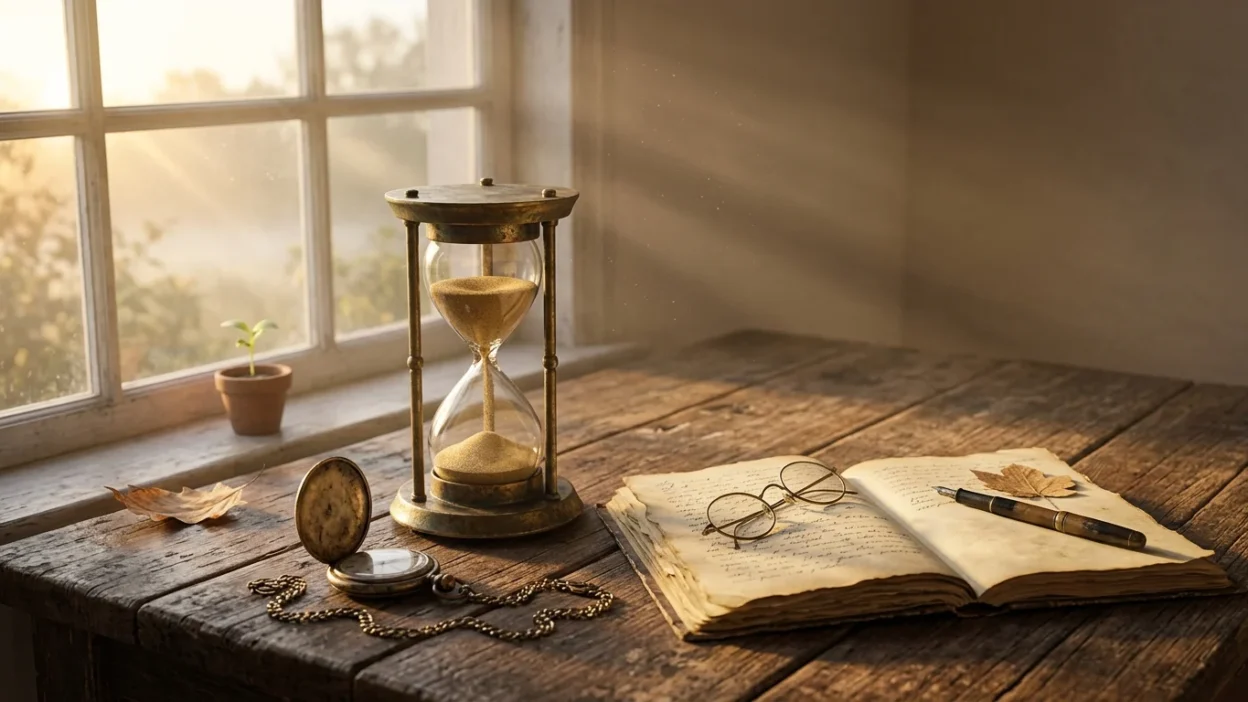
Time symbolism explores the deeper meanings associated with life’s passing moments, change, growth, patience, mortality, and new beginnings. Although time is often measured through clocks and calendars, its symbolic meaning reaches far beyond numbers. It represents the experiences that shape us, the opportunities we encounter, and the memories we carry throughout life.
Across cultures, time has been associated with wisdom, destiny, renewal, and the natural cycles of existence. The sunrise can symbolize a fresh beginning, while an autumn sunset may suggest transition or reflection. A ticking clock can remind us of urgency, while a quiet moment can represent peace and awareness.
Understanding time symbolism helps us explore how people interpret the past, experience the present, and imagine the future. It also encourages a meaningful question: how can we use the time available to us in ways that reflect what truly matters?
Time Symbolism Meaning (Clear Definition)
Time symbolism refers to the meanings, ideas, and emotions people associate with the passage of time. It commonly represents change, life’s temporary nature, personal growth, memory, patience, opportunity, and the relationship between beginnings and endings.
Unlike a physical object, time cannot be held or seen directly. People therefore use symbols such as clocks, hourglasses, seasons, sunsets, and calendars to express its meaning.
| Time Symbol | Common Meaning |
|---|---|
| Sunrise | Hope, renewal, and new beginnings |
| Sunset | Completion, reflection, and transition |
| Clock | Structure, urgency, and the passage of time |
| Hourglass | Mortality, patience, and limited time |
| Calendar | Planning, milestones, and life stages |
| Spring | Growth, renewal, and fresh opportunities |
| Autumn | Maturity, change, and letting go |
| Winter | Rest, endurance, and quiet reflection |
| Circle | Cycles, continuity, and repetition |
| Old photograph | Memory, history, and nostalgia |
| Midnight | Mystery, transition, and a new day |
| Ancient ruins | The passage of time and lasting history |
These meanings are common interpretations rather than universal rules. A symbol’s significance depends on its cultural background and the context in which it appears.
What Does Time Represent?
Time can represent several important aspects of human experience, from the natural process of change to the choices that shape our lives.
Change and Transformation
One of the strongest meanings of time is change. People grow older, relationships develop, circumstances shift, and new opportunities emerge.
Time symbolism reminds us that change is a natural part of life. It can represent the movement from uncertainty toward understanding or from one stage of life into another.
Mortality and Impermanence
Time is often associated with mortality because human life has limits. This interpretation appears in literature, philosophy, religious teachings, and artwork.
Although the idea may seem serious, it can encourage gratitude rather than fear. Recognizing that life is temporary can inspire people to value meaningful experiences, care for others, and appreciate the present.
Memory and the Past
Time also represents memory. Experiences from earlier years influence how people understand themselves and relate to the world.
Old photographs, letters, family heirlooms, and historical buildings often symbolize the connection between the present and the past.
This meaning can encourage reflection without suggesting that people must remain attached to earlier experiences.
Opportunity and the Future
Time can symbolize opportunity because the future contains possibilities that have not yet unfolded.
A new day, a fresh calendar page, or a clock approaching midnight may represent the chance to begin again. These symbols encourage hope while reminding us that meaningful progress often requires action.
Patience and Progress
Some achievements require sustained effort rather than immediate results. Time therefore symbolizes patience, practice, and gradual improvement.
Learning a skill, building trust, or developing confidence often happens through repeated experiences. Time reminds us that progress can be real even when it is not immediately visible.
Spiritual Meaning of Time Symbolism
The spiritual meaning of time often involves awareness, personal growth, acceptance, and the search for meaning beyond daily routines.
Living in the Present
Time symbolism can encourage people to pay attention to the present instead of becoming consumed by regret or worry.
This does not mean ignoring the past or refusing to plan for the future. It means recognizing that the present is where people can make decisions, express care, and take meaningful action.
Trusting Life’s Seasons
Life contains different seasons of growth, uncertainty, achievement, loss, and renewal. Spiritually, these seasons can symbolize the changing experiences through which people develop wisdom and resilience.
A difficult period may require patience, while a season of opportunity may call for courage. The symbolism encourages people to respond thoughtfully to their current circumstances.
Accepting What Cannot Be Controlled
Time continues moving regardless of personal wishes. This can symbolize the limits of human control and the importance of distinguishing between what we can change and what we must accept.
Acceptance does not mean giving up. Instead, it can help people focus their energy on responsible choices and meaningful actions.
Personal Awakening
A symbolic moment of awakening may represent recognizing a truth, reconsidering priorities, or beginning a new stage of personal development.
Sunrise, dawn, and the first light of morning often communicate this idea. They suggest that understanding can emerge gradually, just as daylight follows darkness.
Biblical and Religious Meaning of Time Symbolism
The Bible explores time through themes of creation, life’s seasons, wisdom, patience, and the relationship between human plans and God’s purposes. It does not present every clock, calendar, or time-related image as having one fixed symbolic meaning.
A Time for Every Season
Ecclesiastes 3:1 teaches that there is a season for every activity and a time for every matter under heaven.
This passage is often understood as a reflection on life’s changing circumstances. It acknowledges that experiences differ across seasons and that not every period serves the same purpose.
In Christian reflection, time can symbolize the importance of responding wisely to the stage of life a person is experiencing.
Using Time Wisely
Psalm 90:12 asks God to teach people to number their days so that they may gain a heart of wisdom.
The verse encourages awareness of life’s limits and thoughtful use of the time available. It can inspire believers to prioritize compassion, responsibility, faith, and meaningful relationships.
God’s Timing and Human Plans
Proverbs 16:9 describes how a person may plan a course while the Lord establishes the steps. This idea is often connected with humility about the future.
In this context, time symbolism can remind Christians to make thoughtful plans while recognizing that not every outcome is under their control.
Eternity and the Temporary Nature of Life
Christian theology distinguishes between human life within time and the concept of eternity. Time-related symbols may therefore encourage reflection on what is temporary and what believers understand as spiritually enduring.
Other religious and philosophical traditions interpret time in different ways, including through cycles, impermanence, and spiritual development. These perspectives should be understood within their own traditions rather than treated as identical beliefs.
Time Symbolism in History and Culture
Different societies have developed ways to measure time and attach cultural meanings to its passage.
Ancient Civilizations and Time
Ancient communities observed the movements of the sun, moon, and stars to understand seasons, organize agriculture, and establish calendars.
These practices connected time with nature, survival, and collective life. The sky became both a practical guide and a source of symbolic meaning.
Time in Ancient Egypt
Ancient Egyptian culture placed significant importance on death, the afterlife, and the continuation of existence. Religious beliefs and funerary art reflected ideas about life’s transition and what might follow it.
Time-related symbolism in this context often connects with cycles, renewal, and the relationship between earthly life and the afterlife. Specific meanings varied across periods and religious settings.
Time in Greek Philosophy
Ancient Greek thought included different ways of discussing time. Two terms often distinguished in modern explanations are chronos, associated with measurable or sequential time, and kairos, associated with an opportune or fitting moment.
This distinction is useful for understanding two familiar experiences: the time shown on a clock and the feeling that a particular moment is especially meaningful.
Time in Modern Society
Modern life relies heavily on schedules, deadlines, digital clocks, and standardized calendars. Time often represents organization, productivity, and efficiency.
However, modern cultural discussions also explore the pressure of constant busyness. Time symbolism can therefore represent both the benefits of structure and the importance of rest, flexibility, and human connection.
Time Symbolism in Literature and Art
Writers and artists frequently use time to explore memory, identity, change, and the limits of human control.
Time as a River
A river is a common metaphor for time because water continuously moves forward. It can symbolize the flow of life, transformation, and the inability to return to precisely the same moment.
In literature, this image can represent a character’s changing identity or the way experiences shape the future.
Time as a Circle
Circular imagery often represents recurring cycles, continuity, and renewal. The changing seasons, the cycle of day and night, and repeating calendar patterns all contribute to this association.
In stories and artwork, circles may suggest that experiences repeat or that endings can lead into new beginnings.
Time as an Hourglass
An hourglass makes time visible through the steady movement of sand. In art, it often symbolizes mortality, patience, and the temporary nature of human achievements.
Its shape also suggests transition: the sand moves from one chamber to another, changing its arrangement without disappearing.
Time and Nostalgia
Artists may use faded photographs, old letters, abandoned buildings, or worn objects to represent memories and the passage of years.
These images can evoke longing for the past, appreciation for history, or reflection on how experiences change meaning over time.
Different Types of Time Symbolism
Time can be represented through many images, each emphasizing a different aspect of human experience.
Sunrise and Dawn Symbolism
Sunrise often symbolizes hope, renewal, clarity, and fresh opportunities. It marks the beginning of a new day and can represent the possibility of approaching a challenge differently.
Dawn may also symbolize gradual understanding, as light slowly reveals what was previously hidden.
Sunset Symbolism
Sunset commonly represents completion, reflection, transition, and the peaceful ending of a stage.
Depending on the setting, it may express contentment, nostalgia, or the recognition that a particular experience has reached its conclusion.
Clock Symbolism
A clock often represents measurable time, responsibility, punctuality, and urgency.
A rapidly approaching deadline may emphasize pressure, while a clock in a peaceful room may symbolize routine and stability.
Hourglass Symbolism
An hourglass commonly represents mortality, patience, limited time, and the gradual movement from one stage to another.
Turning an hourglass over can suggest renewal or the beginning of another cycle.
Seasonal Time Symbolism
The seasons offer a powerful framework for understanding life’s changes.
- Spring: Growth, hope, and new opportunities.
- Summer: Energy, abundance, and activity.
- Autumn: Maturity, gratitude, and letting go.
- Winter: Rest, endurance, and reflection.
These associations are common in many artistic and literary contexts, though their significance can vary by climate and culture.
Time Symbolism in Dreams: Possible Meanings
Dreams about time may reflect thoughts about deadlines, memories, transitions, or uncertainty. There is no scientifically established universal meaning for a particular time-related dream.
Dreaming That Time Is Running Out
This dream may reflect pressure, worry, or a sense that a responsibility needs attention. Consider whether a real-life deadline or decision has been occupying your thoughts.
Dreaming About Traveling Back in Time
Traveling into the past in a dream may relate to memories, regret, curiosity, or a wish to understand an earlier experience differently.
It does not necessarily mean that you want to return to the past. It may simply reflect the importance of an earlier event in your current thinking.
Dreaming That Time Has Stopped
A dream in which time stops may connect with feeling stuck, overwhelmed, or eager to pause during a demanding period.
It could also represent a desire to preserve a meaningful moment. Your feelings during the dream can help clarify the interpretation.
Dreaming About a New Day
A new day may symbolize hope, renewal, or readiness to approach a situation differently. It can reflect a desire to make progress or move beyond a difficult experience.
Dreaming About Being Late
Being late in a dream may relate to concerns about expectations, responsibilities, or missed opportunities.
Rather than treating it as a prediction, consider whether you feel pressured to meet a particular standard or timeline in waking life.
Time Symbolism in Relationships
In relationships, time can symbolize commitment, shared memories, patience, and the gradual development of trust.
Shared Time and Connection
Time spent together can become a meaningful part of a relationship. Ordinary conversations, celebrations, and acts of support may create memories that remain important for years.
In this context, time symbolizes attention and the willingness to make room for another person.
Patience and Understanding
People develop at different rates and may need different amounts of time to process emotions or adjust to change.
Time symbolism can encourage patience, honest communication, and respect for personal boundaries rather than pressure to meet an arbitrary relationship timeline.
Memories and Change
Photographs, anniversary dates, and familiar places can represent shared history. They remind people how relationships evolve through experiences.
At the same time, relationships may change as individuals grow. Time symbolism can encourage people to appreciate their history while remaining open to the present.
Time Symbolism and Personal Growth
Time symbolism can help people reflect on their priorities, habits, and approach to change.
Learning From the Past
Past experiences can provide valuable information about what worked, what caused difficulty, and what may need to change.
Learning from the past means using those lessons constructively rather than allowing regret to define the present.
Making Intentional Choices
The idea that time is limited can encourage people to choose their priorities carefully. This might involve developing a skill, strengthening relationships, pursuing education, or making space for rest.
Small, consistent actions often matter more than dramatic plans that are never put into practice.
Accepting Gradual Progress
Personal growth is rarely immediate. Building confidence, learning new skills, and changing habits often require repetition and patience.
Time symbolizes the value of steady effort, even when the results are not yet obvious.
Embracing New Beginnings
A new year, birthday, sunrise, or personal milestone can provide an opportunity to reflect and begin again.
These events do not automatically change circumstances, but they can help people organize their intentions and take practical steps toward meaningful goals.
Time Symbolism in Modern Life
Today, time is represented through digital clocks, calendars, timers, schedules, and notifications. These tools help people coordinate activities and organize responsibilities.
At the same time, constant reminders of time can create pressure to remain productive. Modern time symbolism therefore includes a tension between efficiency and well-being.
A calendar can represent planning and progress, but an unscheduled afternoon may symbolize freedom and rest. A countdown timer can create urgency, while a sunrise photograph may encourage a slower and more reflective perspective.
In personal development, time is increasingly understood as something to manage thoughtfully rather than fill completely. The goal is not to make every moment productive but to use time in ways that support a meaningful life.
Positive and Negative Time Symbolism
Positive meanings:
- Growth and transformation
- Hope and new beginnings
- Patience and perseverance
- Wisdom gained through experience
- Meaningful memories
- Awareness of the present
- Renewal and fresh opportunities
Challenging meanings:
- Fear of aging or mortality
- Regret about the past
- Anxiety about deadlines
- Impatience with slow progress
- Worry about the future
- Feeling stuck or left behind
- Pressure to meet social expectations
Time itself is neither positive nor negative. Its symbolism reflects how people experience change, uncertainty, opportunity, and the limits of their control.
Why Is Time Symbolism So Powerful?
Time symbolism is powerful because time influences every stage of life. People experience beginnings, growth, waiting, achievement, loss, and change, even though time itself cannot be held or seen directly.
Symbols such as clocks, rivers, seasons, and sunsets make these abstract experiences easier to understand. They give people a way to express emotions that can otherwise be difficult to describe.
Time symbolism also connects personal experience with the natural world. A sunrise offers an image of renewal, while autumn leaves suggest that letting go can be part of a larger cycle.
Ultimately, time symbolism reminds us that life is shaped not only by how long we live but also by how we experience our moments and respond to the changes around us.
FAQs About Time Symbolism
What does time symbolize spiritually?
Time may symbolize awareness, personal growth, life’s changing seasons, patience, and the importance of living meaningfully. Interpretations vary across spiritual traditions.
What does time symbolize in life?
Time commonly represents change, opportunity, memory, mortality, progress, and the relationship between the past, present, and future.
What does time symbolize in the Bible?
Biblical themes associated with time include wisdom, life’s seasons, human limitations, and trust in God. Ecclesiastes 3:1 and Psalm 90:12 are often discussed in this context.
What does a clock symbolize?
A clock commonly represents measurable time, routine, responsibility, urgency, and awareness of life’s passing moments.
What does a sunset symbolize in relation to time?
A sunset often symbolizes completion, reflection, transition, and the end of a stage. It can also represent peace and gratitude.
What does time symbolize in dreams?
Time-related dreams may reflect deadlines, memories, uncertainty, or transitions. Their meaning depends on the dreamer’s circumstances and emotions rather than a universal prediction.
Why is time associated with mortality?
Time is associated with mortality because human life has limits and moments cannot be repeated exactly. This symbolism often encourages gratitude and thoughtful choices.
What does a new year symbolize?
A new year commonly symbolizes renewal, reflection, fresh intentions, and the opportunity to approach goals differently.
Final Thoughts
Time symbolism helps us understand the meaning of change, memory, opportunity, and life’s temporary nature. Through clocks, hourglasses, seasons, rivers, and sunsets, people express the experiences of moving forward while carrying lessons from the past.
Spiritually, time can encourage patience, gratitude, and awareness. In history and culture, it reflects how societies understand nature and organize daily life. In literature and art, it provides a powerful language for expressing transformation, nostalgia, and hope.
The deeper lesson of time symbolism is not that every moment must be filled with activity. It is that time deserves thoughtful attention. By learning from the past, participating in the present, and preparing wisely for the future, we can give greater meaning to the time we have.