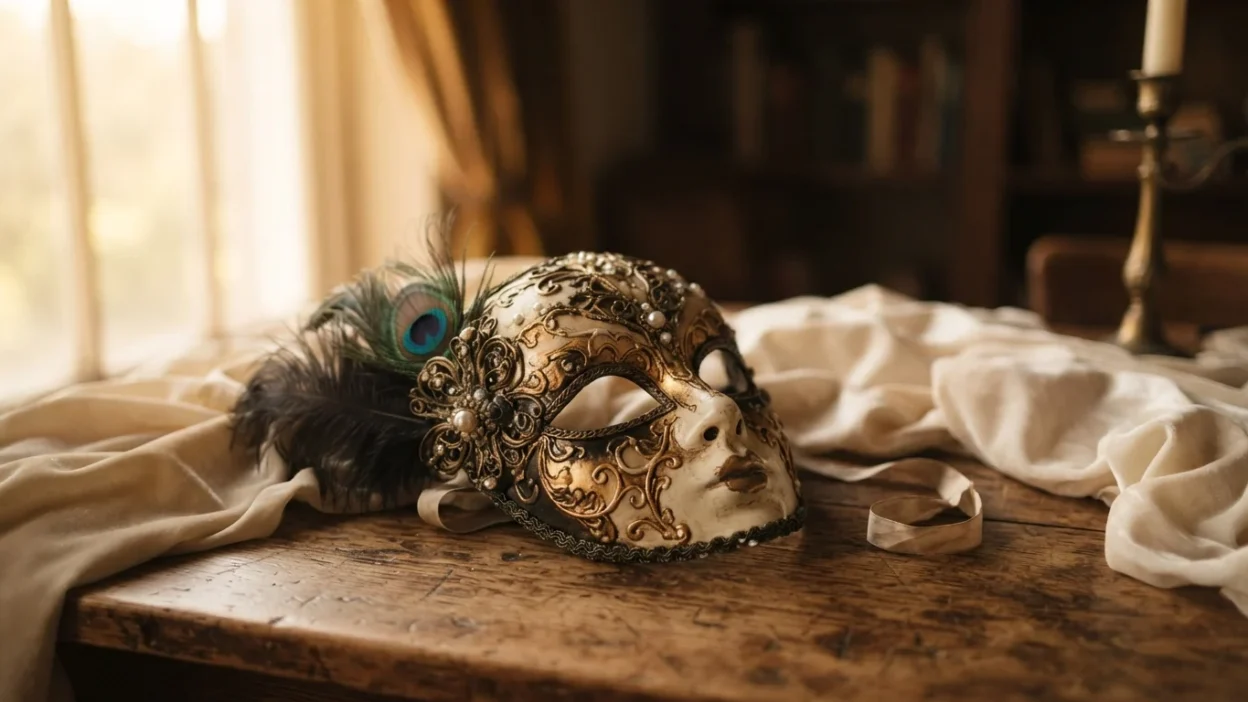
Mask symbolism is closely connected with identity, mystery, secrecy, transformation, protection, and the different roles people play in life. A mask can hide a face, but symbolically it can reveal something deeper about personality, society, emotions, or identity.
Throughout history, masks have been used in ceremonies, theater, religious traditions, celebrations, performances, and artistic expression. Their meanings vary greatly depending on culture and context.
Understanding mask symbolism can help explain why masks continue to appear in art, dreams, literature, spirituality, and modern culture.
Mask Symbolism Meaning (Clear Definition)
Mask symbolism generally represents identity, concealment, protection, transformation, mystery, self-expression, and hidden emotions.
Because a mask changes or conceals the face, it naturally raises questions about what someone chooses to reveal and what they prefer to keep private.
| Mask Symbolism | Common Meaning |
|---|---|
| Identity | The roles or identities we present |
| Mystery | The unknown or hidden |
| Secrecy | Concealing information or feelings |
| Protection | Guarding the self from outside influences |
| Transformation | Becoming or representing something different |
| Self-expression | Communicating emotions or ideas |
| Hidden emotions | Feelings kept beneath the surface |
| Social roles | The different personas people adopt |
The meaning of a mask depends strongly on how and where it is used.
What Does Mask Symbolism Represent?
Hidden Identity
One of the strongest meanings of a mask is concealment.
A masked person may be difficult to identify, making the mask a symbol of mystery and hidden identity.
Symbolically, this can represent aspects of ourselves that we do not readily show to others.
Protection
Masks can also represent protection.
People sometimes hide parts of themselves because they want privacy, emotional safety, or distance from others. In symbolic terms, the mask becomes a protective boundary.
This does not always mean deception. Sometimes protecting one’s private self is simply a natural part of being human.
Transformation
Putting on a mask can create the feeling of becoming someone or something different.
For this reason, masks have long been connected with transformation. A performer can take on a character, while a ceremonial participant may symbolically enter a different spiritual or social role.
Social Roles
In everyday life, people sometimes behave differently depending on their surroundings.
Someone may act one way with family, another way at school or work, and differently with close friends.
Mask symbolism can therefore represent the various roles and identities people navigate.
Spiritual Meaning of Mask Symbolism
Spiritually, masks can symbolize the difference between outer appearance and inner identity.
A mask may encourage reflection on authenticity, self-awareness, and the parts of ourselves that remain hidden.
Looking Beyond Appearances
A mask reminds us that appearances do not always reveal the complete truth.
Someone may appear confident while privately feeling uncertain, or appear calm while dealing with difficult emotions.
Spiritually, this symbolism can encourage compassion and a willingness to look beyond surface impressions.
The Hidden Self
A mask can represent aspects of personality that have been suppressed, protected, or left unexplored.
It may encourage self-reflection by asking: What parts of myself do I show, and what parts do I keep hidden?
Transformation and Renewal
Because masks can represent different identities, they can also symbolize personal transformation.
Changing one’s outer role may represent an internal process of growth, maturity, or discovering a new sense of purpose.
Biblical and Religious Meaning of Mask Symbolism
The Bible does not assign one universal symbolic meaning to masks.
However, Scripture frequently discusses themes related to appearance, sincerity, hidden motives, hypocrisy, and inner character.
For example, biblical teachings often emphasize that God looks beyond outward appearance and considers the heart and character of a person.
Because of this, a mask can sometimes be used in Christian reflection as a metaphor for pretending, hiding one’s true intentions, or focusing too heavily on appearances.
However, this is a symbolic application rather than a fixed biblical definition of masks.
In other religious and ceremonial traditions, masks can have entirely different meanings, including sacred identity, ancestral connection, ritual transformation, protection, or communication with the spiritual world.
Mask Symbolism in History and Culture
Masks have existed in many societies for thousands of years.
Their purposes have included theater, ceremony, celebration, storytelling, ritual, and artistic expression.
Ancient Greek Theater
Masks played an important role in ancient Greek theater.
Performers used masks to represent different characters and communicate recognizable expressions to audiences. The familiar theatrical association between comedy and tragedy developed partly from this tradition.
Theater masks therefore became symbols of performance, emotion, character, and the roles people play.
Ceremonial and Ritual Masks
Various cultures have developed masks for ceremonial and ritual purposes.
Their meanings differ widely. Some have been connected with community traditions, spiritual practices, storytelling, ancestry, or important ceremonies.
It is important not to treat all cultural masks as having the same meaning because traditions are highly diverse.
Venetian Masks
Venetian masks became strongly associated with Carnival traditions in Venice.
They can symbolize anonymity, celebration, creativity, and temporary freedom from ordinary social identities.
The ability to conceal one’s identity created an interesting symbolic relationship between mystery and social freedom.
Mask Symbolism in Literature and Art
Masks are powerful artistic symbols because they can represent both revelation and concealment.
A character wearing a mask may be hiding their identity, emotions, intentions, or past.
In literature, masks can represent deception, secrecy, social expectations, or the difference between public and private identity.
Artists may also use masks to explore questions about personality and authenticity.
A portrait containing a mask might suggest that the visible person is only one part of a much larger story.
Dream Meaning of Mask Symbolism
Dreams involving masks can have many possible interpretations. There is no universal meaning, and dreams should not automatically be treated as predictions.
A mask in a dream may symbolize:
- Hiding emotions
- Protecting personal boundaries
- Uncertainty about someone’s intentions
- Feeling misunderstood
- Exploring a different identity
- Fear of being judged
- Keeping something private
- Discovering a hidden part of yourself
The emotional atmosphere of the dream is important.
A beautiful or peaceful mask may suggest creativity, transformation, or self-expression, while an unsettling mask may reflect uncertainty or discomfort with something hidden.
Modern Meaning of Mask Symbolism
Masks remain common in modern society, appearing in theater, movies, festivals, fashion, artwork, costumes, and digital culture.
Today, a mask may symbolize individuality, anonymity, rebellion, creativity, privacy, or mystery.
In fictional stories, masked characters are often used to create suspense because the audience cannot immediately see who the person really is.
In everyday language, people may also describe someone as “wearing a mask” when they believe that person’s public behavior does not fully reflect their private feelings.
Mask Symbolism and Personal Growth
Mask symbolism can provide several useful lessons about personal development.
Authenticity
A mask can encourage us to consider whether we are comfortable showing our genuine personality.
Being authentic does not mean sharing everything with everyone. Healthy boundaries and privacy can coexist with honesty.
Self-Awareness
The idea of a mask can help us recognize the different roles we play.
Understanding these roles can make it easier to identify which behaviors genuinely reflect our values and which are simply responses to expectations.
Letting the Mask Down
Symbolically removing a mask can represent vulnerability and trust.
It may suggest becoming comfortable enough to express genuine thoughts and feelings with people who have earned that trust.
Positive and Negative Mask Meanings
Mask symbolism can have both positive and negative associations.
Positive meanings may include:
- Protection
- Creativity
- Transformation
- Privacy
- Self-expression
- Mystery
- Adaptability
- Confidence
Negative meanings may include:
- Deception
- Secrecy
- Emotional hiding
- False identity
- Fear of vulnerability
- Pretending
- Isolation
The surrounding situation determines which interpretation is most appropriate.
Mask and Mirror Symbolism
A mask and mirror create an especially interesting symbolic combination.
The mask represents the identity presented to others, while the mirror represents self-reflection.
Together, they can symbolize the difference between who we appear to be and how we understand ourselves.
This combination may encourage deeper questions about authenticity and self-perception.
Mask and Theater Symbolism
Theater masks are commonly associated with comedy and tragedy.
They represent different emotional experiences and the many characters people may play throughout life.
Symbolically, theatrical masks can remind us that human life contains contrasting emotions. Happiness and sadness, confidence and uncertainty, and strength and vulnerability can all exist within the same person.
Why Is Mask Symbolism So Powerful?
Masks are powerful symbols because they create an immediate contrast between what is visible and what is hidden.
A face normally helps people recognize one another and understand expressions. When it is covered, uncertainty appears.
This makes the mask a natural symbol of mystery, identity, secrecy, protection, and transformation.
At a deeper level, masks raise a universal question: How much of ourselves do we show to the world?
That question keeps mask symbolism relevant across cultures and generations.
Frequently Asked Questions About Mask Symbolism
What is the main meaning of mask symbolism?
The main meanings include identity, mystery, secrecy, protection, transformation, hidden emotions, social roles, and self-expression.
Is mask symbolism always negative?
No. Masks can symbolize positive ideas such as protection, creativity, privacy, transformation, adaptability, and artistic expression.
What does a mask symbolize spiritually?
Spiritually, a mask can represent the difference between outer appearance and inner identity, encouraging self-awareness and authenticity.
What does a mask symbolize in dreams?
A mask in a dream may represent hidden emotions, privacy, uncertainty, protection, identity, or a part of yourself that you are exploring.
What do theater masks symbolize?
Theater masks commonly represent contrasting emotions and characters, especially comedy and tragedy. They can also symbolize the different roles people play in life.
What does removing a mask symbolize?
Removing a mask can symbolize authenticity, vulnerability, honesty, self-discovery, or becoming comfortable with one’s genuine identity.
Why are masks associated with mystery?
Masks conceal recognizable facial features and therefore create uncertainty about identity, emotions, and intentions. This naturally makes them powerful symbols of mystery.
Final Thoughts
Mask symbolism is ultimately about the relationship between appearance and identity.
A mask can represent protection, mystery, creativity, transformation, secrecy, or the social roles people adopt. It can hide something, but it can also give someone a new way to express themselves.
Perhaps the most meaningful lesson of mask symbolism is that every person has both a visible and a private side.
Knowing when to protect yourself, when to express yourself, and when it is safe to let others see the person behind the mask can be an important part of self-awareness.

Emily Carter is a Christian content writer dedicated to encouraging believers through faith-filled articles and heartfelt prayers. She has a deep love for Scripture and enjoys making biblical teachings easy to understand for readers of all ages. Her work covers Christian living, family faith, devotionals, and inspirational prayers. Emily believes that God’s Word brings hope, healing, and guidance to every season of life. She writes with warmth, authenticity, and a strong commitment to biblical truth. Her articles have inspired thousands of readers to build a consistent prayer life. Outside of writing, Emily enjoys volunteering in church ministries, reading, and spending time in nature. Her goal is to help people experience God’s love and grace every day.