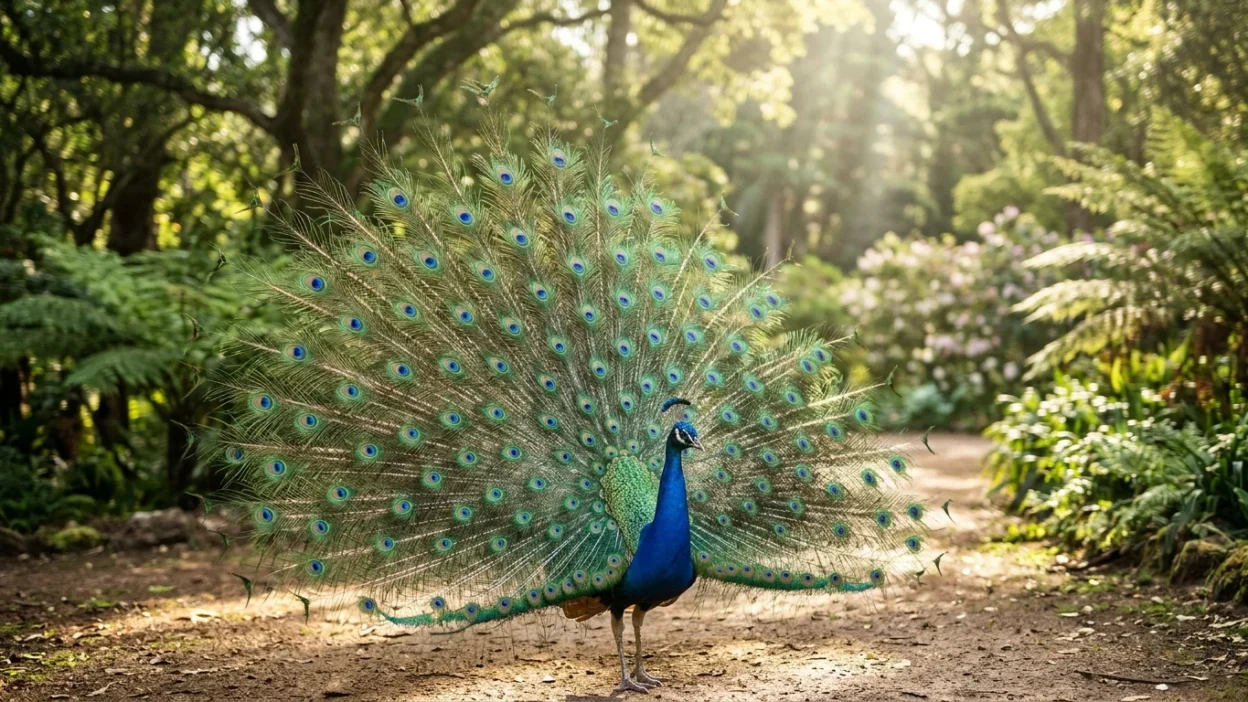
Peacock symbolism has fascinated people for centuries because of the bird’s brilliant feathers, graceful movements, and distinctive appearance. Across different cultures, the peacock is associated with beauty, pride, confidence, renewal, immortality, and spiritual awakening. Its colorful tail can also represent self-expression, individuality, and the courage to stand out.
But what does a peacock symbolize beyond its beautiful appearance? Its meaning can change depending on cultural traditions, religious beliefs, personal experiences, and the situation in which it appears.
In this guide, we will explore peacock symbolism in spirituality, history, religion, dreams, relationships, art, and modern life. Understanding these interpretations can help you appreciate why this remarkable bird continues to inspire people around the world.
Peacock Symbolism Meaning (Clear Definition)
Peacock symbolism refers to the meanings and ideas people associate with the peacock’s appearance, behavior, and distinctive feathers. It commonly represents beauty, confidence, pride, dignity, renewal, prosperity, and spiritual awareness.
The peacock’s colorful display is often interpreted as a reminder to appreciate individuality and express personal qualities without hiding them.
| Symbolic Meaning | Interpretation |
|---|---|
| Beauty | Appreciating appearance, creativity, and uniqueness |
| Confidence | Showing your abilities without fear |
| Pride | Recognizing personal worth and achievements |
| Renewal | Embracing change and new beginnings |
| Wisdom | Developing awareness and understanding |
| Prosperity | Attracting abundance and good fortune in some traditions |
| Immortality | Representing eternal life in certain historical beliefs |
| Self-expression | Celebrating individuality and creativity |
Although these meanings appear in many symbolic traditions, they are interpretations rather than universal rules. The meaning of a peacock can be personal and may depend on the context.
What Does a Peacock Represent?
A peacock can represent several positive qualities, but its symbolism also includes more complicated ideas, such as vanity and excessive pride.
1. Beauty and Elegance
The peacock is widely admired for its colorful feathers and graceful appearance. It often symbolizes natural beauty, elegance, and the ability to appreciate the wonderful details of life.
Its appearance can remind us that beauty is not limited to physical attractiveness. Creativity, kindness, confidence, and individuality can also make a person beautiful.
2. Confidence and Self-Expression
A peacock spreading its feathers creates an impressive display. Symbolically, this behavior is often connected with confidence and self-expression.
It can represent the importance of recognizing your strengths and allowing your personality to shine. Rather than constantly comparing yourself with others, the peacock encourages you to appreciate what makes you different.
3. Pride and Self-Respect
The peacock’s impressive appearance has made it a traditional symbol of pride and dignity.
In a positive sense, this represents healthy self-respect and the ability to recognize your achievements. However, it can also symbolize arrogance when confidence becomes an excessive desire for attention or admiration.
4. Renewal and Transformation
Peacocks periodically replace their feathers through natural molting. This process has contributed to their association with renewal and transformation.
Symbolically, a peacock can represent leaving an old chapter behind and welcoming personal growth. It reminds us that change can create opportunities for a more meaningful life.
5. Prosperity and Good Fortune
In some cultures, peacocks are associated with prosperity, abundance, and good fortune. Their magnificent appearance and connection with royalty have helped establish this interpretation.
A peacock image or decorative design may therefore be used to express hopes for success, happiness, and a prosperous future.
Spiritual Meaning of Peacock Symbolism
The spiritual meaning of a peacock is often connected with inner beauty, awareness, confidence, renewal, and the discovery of personal potential.
Spiritual Awakening
The peacock’s colorful feathers can symbolize becoming more aware of the world and your place within it. Its appearance may serve as a reminder to look beyond everyday concerns and consider your personal values.
For some people, seeing a peacock represents a period of spiritual reflection or a desire to develop a deeper connection with their beliefs.
Inner Beauty and Personal Growth
A peacock’s beauty is easy to notice, but its symbolic meaning can encourage people to look beyond outward appearance.
It may represent the development of qualities such as patience, compassion, wisdom, and gratitude. These qualities can create a kind of inner beauty that is not dependent on appearance or social recognition.
Confidence Without Comparison
Spiritually, the peacock can represent the freedom to express your authentic self.
Its symbolism encourages you to recognize your abilities without needing to compete with everyone around you. Healthy confidence allows you to appreciate others while remaining comfortable with your own identity.
Protection and Watchfulness
The eye-like patterns on a peacock’s tail feathers have inspired interpretations involving awareness, observation, and protection.
In some traditions, these patterns are associated with watchfulness or the ability to recognize what is happening around you. These are symbolic associations rather than evidence that peacock feathers provide supernatural protection.
Biblical and Religious Meaning of Peacock Symbolism
The peacock has a place in some religious and historical traditions, although its meaning is not identical across faiths.
Peacock Symbolism in the Bible
The Bible mentions peacocks in 1 Kings 10:22 and 2 Chronicles 9:21. These passages describe peacocks among the valuable goods brought by the ships associated with King Solomon’s trade.
Their appearance in these accounts connects them with wealth, luxury, and the impressive nature of royal possessions.
However, the Bible does not establish a single spiritual meaning for peacocks. Interpretations involving pride, beauty, or renewal come largely from broader symbolism rather than a specific biblical teaching.
Peacock Symbolism in Hinduism
In Hindu traditions, the peacock is especially significant because of its association with several divine figures.
It is commonly connected with Lord Kartikeya, also known as Murugan, whose traditional vehicle is the peacock. The bird is also associated with Goddess Saraswati in some regional and artistic traditions.
The peacock can represent beauty, knowledge, power, and the ability to overcome negative qualities. Its colorful appearance also makes it a prominent symbol in religious art and celebrations.
Peacock Symbolism in Buddhism
In Buddhist traditions, the peacock is sometimes associated with wisdom and the transformation of negative emotions.
Certain symbolic interpretations connect the bird’s ability to consume poisonous substances with the idea of transforming difficulties into spiritual understanding.
Peacock imagery also appears in Buddhist art and iconography, although meanings vary across traditions and regions.
Peacock Symbolism in Christianity
In early Christian art, the peacock became associated with immortality and resurrection. This connection was influenced partly by ancient beliefs about the bird’s flesh and its supposed resistance to decay.
Its ability to renew its feathers also contributed to associations with renewal and eternal life.
These are historical artistic associations, not direct biblical definitions.
Peacock Symbolism in History and Culture
The peacock has appeared in different civilizations as a symbol of beauty, royalty, prosperity, and spiritual significance.
Ancient Greece
In Greek mythology, the peacock was associated with Hera, the goddess of marriage and queen of the gods.
According to a well-known myth, the eyes on the peacock’s feathers were connected with the hundred-eyed giant Argus. Hera placed his eyes on the bird’s tail in his memory.
Because of this story, the peacock became associated with watchfulness, divine power, and dignity.
Ancient Rome
In ancient Rome, peacocks were admired as luxurious birds and were associated with wealth and status.
They appeared in decorative art and were sometimes connected with Juno, the Roman counterpart of Hera. Their striking feathers made them suitable symbols of beauty and prestige.
Persian and Indian Traditions
Peacocks have long been important in Persian and Indian art, architecture, textiles, and royal decoration.
In India, the bird is admired for its beauty and cultural significance. The Indian peafowl is also the national bird of India.
Peacock motifs are frequently found in traditional clothing, jewelry, paintings, and decorative designs.
Chinese Culture
In Chinese art and historical traditions, peacock imagery has been associated with beauty, dignity, and high status.
Its impressive feathers have appeared in decorative objects and clothing designs. In some historical contexts, peacock feather ornaments were associated with official rank and prestige.
Different Types of Peacock Symbolism
The appearance and color of a peacock can influence its symbolic interpretation.
Blue Peacock Symbolism
<AsyncImage query=”Indian blue peacock displaying iridescent blue neck and colorful tail feathers natural photography” aspectRatio=”16:9″ width=”100%”/>
A blue peacock commonly represents confidence, calmness, dignity, and spiritual awareness.
Blue is often associated with peace, trust, and communication. Combined with the peacock’s appearance, it can symbolize expressing yourself with confidence while maintaining inner balance.
White Peacock Symbolism
<AsyncImage query=”beautiful white peacock displaying pure white tail feathers in elegant garden photography” aspectRatio=”16:9″ width=”100%”/>
A white peacock is often associated with purity, peace, clarity, and spiritual renewal.
Its unusual appearance can represent a fresh beginning or a desire to move beyond confusion. In modern spiritual interpretations, it may also symbolize simplicity and inner transformation.
White peacocks are generally leucistic rather than true albino birds.
Green Peacock Symbolism
<AsyncImage query=”green peafowl with iridescent green plumage in natural tropical habitat wildlife photography” aspectRatio=”16:9″ width=”100%”/>
Green peacock symbolism is often connected with nature, growth, harmony, renewal, and abundance.
Green is commonly associated with fresh opportunities and emotional balance. A green peacock can therefore represent personal development and a stronger connection with the natural world.
Black Peacock Symbolism
A black peacock is sometimes interpreted as a symbol of mystery, individuality, strength, and transformation.
It may represent hidden potential or the courage to explore unfamiliar parts of yourself. However, dark peacock imagery does not have one established meaning across cultures.
Peacock Feather Symbolism
<AsyncImage query=”close up macro photograph of iridescent peacock tail feather eye pattern” aspectRatio=”16:9″ width=”100%”/>
Peacock feather symbolism is closely connected with beauty, awareness, protection, pride, and good fortune.
The eye-like markings on the feathers have inspired interpretations involving watchfulness and perception. Peacock feathers are also popular in fashion, home decoration, jewelry, and spiritual artwork.
Peacock Symbolism in Literature and Art
Peacocks have appeared in paintings, poetry, stories, architecture, and decorative designs for centuries.
In literature, the bird can represent beauty, vanity, pride, confidence, and the desire for recognition. Writers may use its colorful feathers to describe a character who enjoys attention or takes pride in personal appearance.
In visual art, the peacock often represents luxury, elegance, royalty, and spiritual meaning. Its feathers create striking patterns that artists use to express creativity and visual richness.
The bird can also represent the contrast between outward beauty and inner character. This makes it a useful symbol for exploring questions about identity, self-worth, and appearance.
Peacock Symbolism in Dreams: Possible Meanings
Dreaming about a peacock can have different personal interpretations depending on the dream’s details and your feelings during the experience.
Dream symbolism is subjective and should not be treated as a prediction of future events.
Seeing a Peacock in a Dream
Seeing a peacock may represent confidence, beauty, recognition, or a desire to express yourself more openly.
It could encourage you to acknowledge your abilities and appreciate your individuality.
Seeing a Peacock Spread Its Feathers
A peacock displaying its feathers may symbolize self-expression, ambition, or a wish to be recognized.
It can also invite you to consider whether you are expressing confidence in a healthy way or depending too heavily on other people’s approval.
Seeing a White Peacock
A white peacock in a dream may represent peace, clarity, personal renewal, or spiritual reflection.
The interpretation may be especially meaningful if you are going through a period of change.
Seeing a Peacock Feather
A peacock feather may symbolize beauty, awareness, creativity, or protection in a personal symbolic sense.
Your emotions and associations with the feather can help you understand what it represents to you.
Seeing an Injured Peacock
An injured peacock may reflect feelings of insecurity, disappointment, or difficulty expressing your true personality.
It could be a prompt to consider areas of your life where you need encouragement or emotional support.
Peacock Symbolism in Love and Relationships
In relationships, peacock symbolism can represent attraction, romance, confidence, and the desire to be appreciated.
Its beautiful appearance is sometimes associated with the excitement of romantic attention and the importance of expressing affection.
However, the peacock can also symbolize vanity or excessive attention-seeking. In this interpretation, it reminds people that healthy relationships require more than outward attraction.
Its deeper message may be to balance confidence with kindness, honesty, and mutual respect.
Peacock Symbolism in Tattoos and Jewelry
Peacock designs are popular in tattoos, jewelry, clothing, and decorative accessories because of their distinctive colors and detailed patterns.
A peacock tattoo may represent:
- Confidence and individuality.
- Beauty and creativity.
- Spiritual awareness.
- Personal transformation.
- Pride and self-respect.
- Prosperity and good fortune.
A peacock feather tattoo may focus more specifically on awareness, elegance, and personal expression.
In jewelry, peacock designs can represent grace, luxury, and artistic beauty. Some people also choose them to express cultural heritage or personal spiritual beliefs.
Positive and Negative Meanings of Peacock Symbolism
Like many symbols, the peacock has both positive and negative interpretations.
Positive meanings:
- Beauty and elegance.
- Confidence and self-expression.
- Renewal and transformation.
- Wisdom and awareness.
- Prosperity and abundance.
- Dignity and self-respect.
Negative meanings:
- Vanity and excessive pride.
- Arrogance and self-importance.
- Seeking constant attention.
- Superficiality and obsession with appearance.
- Comparing yourself with others.
The difference often depends on how the bird is represented and the message someone wants to communicate through it.
Why Peacock Symbolism Still Matters Today
Peacock symbolism remains meaningful because its qualities connect with common human experiences.
People continue to admire the bird as a representation of beauty, confidence, creativity, and individuality. Its colorful feathers also make it a popular design in fashion, home decoration, photography, and modern artwork.
At a personal level, the peacock can encourage people to recognize their strengths without becoming overly concerned with recognition or approval.
Its symbolism offers a simple reminder: appreciate your uniqueness, express yourself honestly, and allow personal growth to develop naturally.
Frequently Asked Questions About Peacock Symbolism
1. What does a peacock symbolize spiritually?
A peacock commonly symbolizes confidence, inner beauty, renewal, awareness, and spiritual growth. Its meaning can vary depending on personal beliefs and cultural traditions.
2. Is a peacock a symbol of good luck?
In some cultural traditions, the peacock is associated with good fortune, prosperity, and abundance. However, this belief is not universal.
3. What does a peacock symbolize in the Bible?
Peacocks are mentioned in 1 Kings 10:22 and 2 Chronicles 9:21 as valuable goods associated with royal trade. The passages connect them with luxury, but the Bible does not assign them one specific spiritual meaning.
4. What does a white peacock symbolize?
A white peacock is often interpreted as a symbol of purity, peace, clarity, renewal, and spiritual reflection.
5. What does a peacock feather symbolize?
A peacock feather can symbolize beauty, awareness, confidence, creativity, and watchfulness. Some traditions also associate it with protection and good fortune.
6. What does it mean to dream about a peacock?
A peacock dream may reflect confidence, self-expression, recognition, or personal growth. Its meaning depends on the dream’s details and the dreamer’s feelings.
7. What does a peacock symbolize in love?
In love and relationships, a peacock may represent attraction, romance, confidence, and the desire to feel appreciated. It can also serve as a reminder to avoid vanity and focus on genuine connection.
8. Why is the peacock associated with immortality?
In ancient and early Christian traditions, the peacock became associated with immortality partly because of historical beliefs about its flesh resisting decay. Its recurring feather renewal also contributed to this symbolism.
9. What does a peacock tattoo represent?
A peacock tattoo can represent individuality, beauty, confidence, creativity, transformation, and pride. The meaning often depends on the design and the personal story behind it.
10. Does a peacock symbolize pride?
Yes. The peacock is commonly associated with pride and dignity. This can represent healthy self-respect, but it may also symbolize vanity or arrogance.
Final Thoughts on Peacock Symbolism
Peacock symbolism carries a rich collection of meanings connected with beauty, confidence, renewal, prosperity, wisdom, and spiritual awareness. Its impressive feathers have inspired stories, religious artwork, cultural traditions, and personal interpretations across many generations.
The peacock can remind us to appreciate our individuality and express our strengths with confidence. At the same time, its association with pride encourages us to remain humble and value inner character as much as outward appearance.
Whether you encounter a peacock in nature, see its image in artwork, or choose its feathers as a personal design, its symbolism offers an opportunity to reflect on beauty, self-expression, and personal growth.

Matthew Collins is a Christian author who writes inspiring articles centered on faith, prayer, and biblical encouragement. He is passionate about helping readers apply God’s Word to their daily lives with confidence and hope. His writing combines practical Christian advice with Scripture-based insights that uplift and strengthen believers. Matthew has years of experience creating devotional content for Christian audiences worldwide. He believes that even short prayers can transform lives through God’s power. His approachable writing style makes biblical truths accessible to everyone. In his free time, he enjoys studying theology, hiking, and serving in community outreach programs. His mission is to encourage people to trust God wholeheartedly and live with unwavering faith.