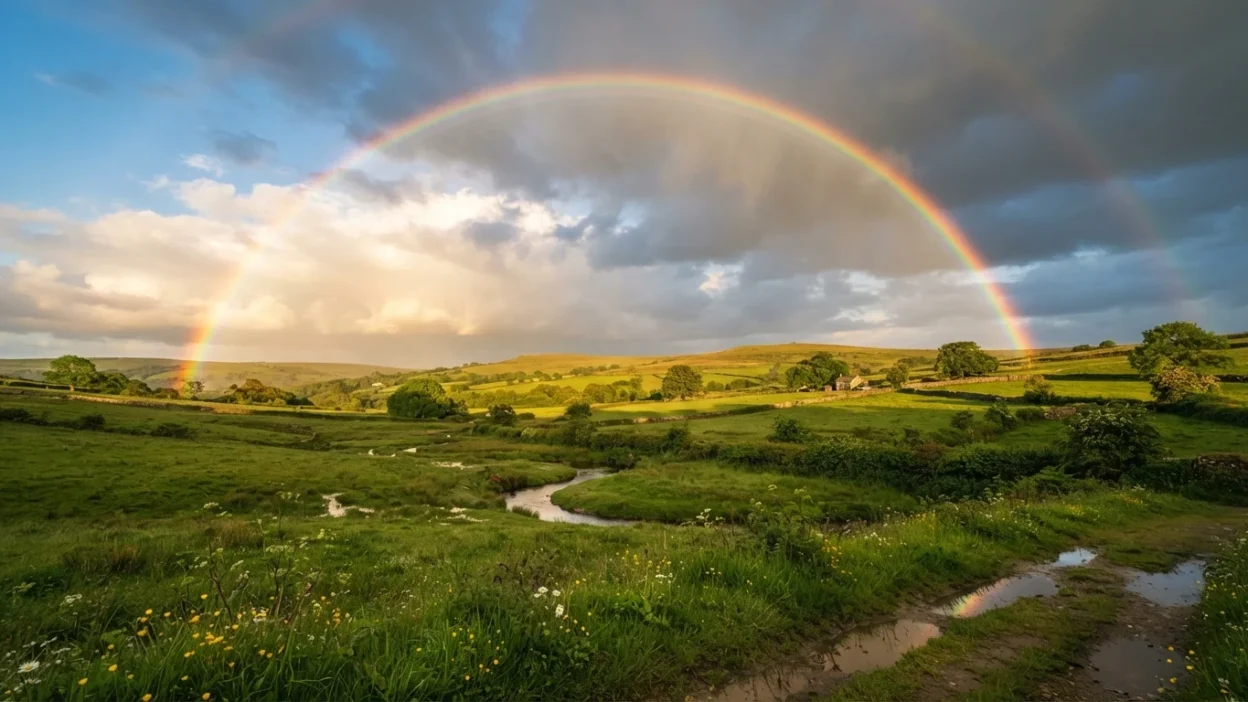
A rainbow is one of nature’s most beautiful and recognizable sights. Appearing when sunlight passes through water droplets, it creates a colorful arc that often feels meaningful beyond its physical beauty. Rainbow symbolism is commonly connected with hope, peace, renewal, promise, unity, and transformation.
Across different cultures and traditions, rainbows have been viewed as signs of blessing, connection, and positive change. Their appearance after rain also gives them a powerful emotional meaning: difficult moments can be followed by brighter days.
Rainbow Symbolism Meaning (Clear Definition)
Rainbow symbolism represents hope, renewal, peace, promise, transformation, and the possibility of better times after difficulty.
Because a rainbow often appears after rainfall, it naturally symbolizes moving from hardship toward calm and brightness. Its many colors can also represent diversity, harmony, and different qualities coming together as one.
| Symbolic Meaning | What It Represents |
|---|---|
| Hope | Light after difficult circumstances |
| Peace | Calm and reconciliation |
| Renewal | A fresh beginning |
| Promise | Faithfulness and assurance |
| Transformation | Change and personal growth |
| Unity | Different elements coming together |
| Joy | Beauty, celebration, and positivity |
What Does Rainbow Represent?
A rainbow can represent several ideas depending on the culture, situation, or personal experience surrounding it.
Hope After Hardship
One of the strongest meanings associated with a rainbow is hope. Because it commonly appears after rain, it can remind people that challenging seasons do not last forever.
Peace and Harmony
The rainbow’s smooth combination of different colors can symbolize harmony. It may represent people, ideas, or experiences existing together without losing their individual identities.
New Beginnings
A rainbow can also symbolize renewal. Seeing one after a storm may feel like a visual reminder that a new chapter can begin after a difficult period.
Promise and Faith
In religious traditions, the rainbow has sometimes been associated with divine promise and faithfulness. This gives it a deeper meaning for people who view natural signs through a spiritual lens.
Spiritual Meaning of Rainbow
Spiritually, rainbow symbolism is often connected with hope, divine presence, protection, renewal, and spiritual encouragement.
For many people, seeing a rainbow can inspire reflection. It may serve as a reminder to remain patient during difficult circumstances and to trust that circumstances can change.
A rainbow can also represent the connection between earthly experiences and something greater than ourselves. Its appearance in the sky can encourage gratitude, wonder, and renewed faith.
Rainbow as a Sign of Hope
A rainbow can symbolize the belief that darkness and difficulty can eventually give way to light. Its temporary appearance makes it especially meaningful as a reminder to appreciate moments of beauty.
Rainbow as Spiritual Renewal
The rainbow may represent a fresh spiritual beginning. It can encourage someone to release discouragement, reflect on what they have learned, and move forward with renewed confidence.
Biblical and Religious Meaning of Rainbow
The rainbow has a particularly important place in the Bible. In Genesis 9, following the flood, God places a rainbow in the clouds as a sign of the covenant between God, Noah, and every living creature.
Because of this biblical account, the rainbow is strongly associated with God’s covenant, faithfulness, mercy, and promise in Christian symbolism.
The rainbow also appears in other biblical passages, including descriptions surrounding God’s glory and heavenly visions. These references contribute to its association with divine majesty and holiness.
For Christians, rainbow symbolism can therefore carry a meaning much deeper than beauty. It can remind believers of God’s promises and faithfulness.
Rainbow in History and Culture
Rainbows have inspired stories and symbolic traditions across many societies.
In Greek mythology, Iris was associated with the rainbow and served as a messenger between gods and humanity. The rainbow therefore became connected with communication between the divine and earthly worlds.
In Irish folklore, the rainbow is famously associated with a pot of gold at its end. This tradition has helped connect rainbows with luck, treasure, and good fortune in popular culture.
Other cultures have developed their own interpretations, including associations with bridges, spiritual realms, blessings, and connections between different worlds.
These traditions are not identical, but they demonstrate how humans have repeatedly found symbolic meaning in this striking natural phenomenon.
Rainbow in Literature and Art
Rainbows frequently appear in literature and visual art as symbols of hope, beauty, change, and emotional resolution.
A rainbow may appear after a difficult event to suggest that a character is entering a better stage of life. Writers can also use it to symbolize reconciliation, discovery, or a renewed sense of purpose.
In paintings and photography, rainbows create a natural contrast between stormy skies and bright colors. This makes them especially effective for expressing the idea that beauty can emerge from difficult circumstances.
Dream Meaning of Rainbow
Dreaming about a rainbow is often interpreted symbolically rather than literally. Its meaning can depend greatly on the dreamer’s emotions and personal circumstances.
A bright rainbow may suggest hope, happiness, emotional healing, or optimism. A rainbow appearing after a storm could represent overcoming a difficult experience.
A fading or incomplete rainbow might symbolize uncertainty, changing circumstances, or something that feels temporary.
Dream symbolism is personal, so a rainbow in a dream does not have one universal interpretation or predict a specific future event.
Modern Meaning of Rainbow
In modern society, the rainbow has developed many meanings beyond traditional symbolism.
It can represent positivity, diversity, inclusion, creativity, celebration, and individuality. Different communities and movements may use rainbow imagery for specific purposes, so its meaning can depend heavily on context.
The rainbow is also widely used in children’s education, decoration, fashion, graphic design, photography, and social media because of its cheerful and recognizable appearance.
At its simplest, however, the modern rainbow remains a powerful image of color emerging after rain.
Rainbow Symbolism and Personal Growth
A rainbow can be a meaningful metaphor for personal growth.
Life rarely follows a completely smooth path. Difficult experiences can bring lessons, maturity, and a clearer understanding of what truly matters.
The rainbow reminds us that transformation can happen gradually. Just as sunlight and water create something beautiful under the right conditions, challenging experiences can sometimes lead to greater wisdom and appreciation.
Rainbow as a Symbol of Resilience
A rainbow does not eliminate the storm that came before it. Instead, it appears afterward, making it a fitting symbol of resilience.
It can represent continuing forward even when circumstances have been difficult.
Rainbow as a Symbol of Joy
Its bright colors naturally connect it with happiness and celebration. A rainbow can remind us to notice beautiful moments rather than focusing only on life’s difficulties.
Different Rainbow Colors and Their Symbolism
Because a rainbow contains several colors, each color can carry its own traditional or psychological associations.
- Red: energy, courage, passion, and strength
- Orange: creativity, enthusiasm, and warmth
- Yellow: happiness, optimism, and confidence
- Green: growth, balance, and renewal
- Blue: peace, calmness, and trust
- Indigo: reflection, intuition, and depth
- Violet: imagination, spirituality, and transformation
These associations can vary between cultures and symbolic systems, so they should be understood as common interpretations rather than fixed universal meanings.
Why Are Rainbows So Symbolically Powerful?
Rainbows combine several powerful visual ideas at once: light, water, color, weather, rarity, and temporary beauty.
They are also difficult to control or predict. You cannot simply create the exact conditions for a rainbow whenever you want, which can make seeing one feel special.
Most importantly, a rainbow often appears when a storm is beginning to clear. This natural sequence gives it an emotional message that people easily understand: after difficulty, there can be beauty and hope.
FAQs About Rainbow Symbolism
What is the main meaning of rainbow symbolism?
Rainbow symbolism is commonly associated with hope, peace, renewal, promise, transformation, and unity.
What does a rainbow symbolize spiritually?
Spiritually, a rainbow may symbolize divine promise, encouragement, renewal, hope, and a connection between the physical and spiritual worlds.
What does a rainbow mean in the Bible?
In the Bible, the rainbow is presented as a sign of God’s covenant following the flood in Genesis 9, making it a symbol of promise and faithfulness.
What does seeing a rainbow symbolize?
Seeing a rainbow can symbolize hope, beauty after difficulty, new beginnings, or a peaceful transition into a new stage of life.
What does a rainbow symbolize in dreams?
A rainbow in a dream may represent hope, happiness, renewal, emotional healing, or optimism, although its meaning depends on the individual’s circumstances and feelings.
Final Thoughts
Rainbow symbolism carries a simple but powerful message: beauty can appear after difficult seasons.
Whether viewed through a spiritual, biblical, cultural, artistic, or personal lens, the rainbow continues to represent hope and renewal. Its brief appearance reminds us to appreciate moments of beauty, remain open to change, and believe that brighter possibilities can follow challenging times.